Crevice corrosion is localized attack inside occluded gaps too tight to keep oxygen replenished, and it typically starts at a lower chloride level and lower temperature than pitting on an open surface. Your best defense pairs a higher-molybdenum grade with a crevice-free design: pick 316L over 304L in mild chloride service, move up to duplex 2205 or super duplex 2507 in seawater or brine, and design out the tight gaps under gaskets, deposits, and fouling where the passive film can't repair itself. In any chloride-bearing system, specifying alloy and geometry together stops far more failures than alloy choice alone.
The Mechanism: Oxygen Depletion and Acidification
Stainless steel resists corrosion because a thin, chromium-rich passive oxide film keeps reforming wherever oxygen is present. Inside a crevice that supply is cut off. The gap behaves like a stagnant micro-cell: the oxygen trapped there gets used up maintaining the passive film and cannot be replenished by diffusion from the bulk fluid. The metal inside the crevice turns anodic relative to the freely exposed surface outside, which stays cathodic and well-oxygenated.
As metal dissolves inside the gap, positive metal ions build up and chloride ions migrate in to balance the charge. Those metal chlorides hydrolyze, producing hydrochloric acid and dragging the local pH down toward 1-2 even when the bulk fluid sits near neutral. This acidified, chloride-rich pocket destroys passivity and feeds the attack in a self-sustaining loop. What you get is deep, often hidden penetration under a part that looks clean from the outside, and that is why crevice corrosion is a leading cause of unexpected perforation in flanged and gasketed joints.
CCT Versus CPT: Why Crevices Lower the Threshold
Two lab metrics guide grade selection. The Critical Pitting Temperature (CPT) is the temperature above which pitting initiates on an open surface in the standard ferric chloride test per ASTM G48. The Critical Crevice Temperature (CCT) is the same threshold with a defined crevice former clamped to the specimen. For a given alloy the CCT always runs well below the CPT, commonly by 15-25 degrees Celsius. Put simply, a crevice lets corrosion start under conditions the same alloy would shrug off on an exposed face.
The ranking behind this follows the Pitting Resistance Equivalent Number, PREN = %Cr + 3.3 x %Mo + 16 x %N. Molybdenum and nitrogen raise resistance sharply, so molybdenum content is the practical lever for crevice-prone service. Treat published CPT values as optimistic for gasketed or fouled hardware, and lean on CCT-style data wherever you can get it.
Where Crevices Come From
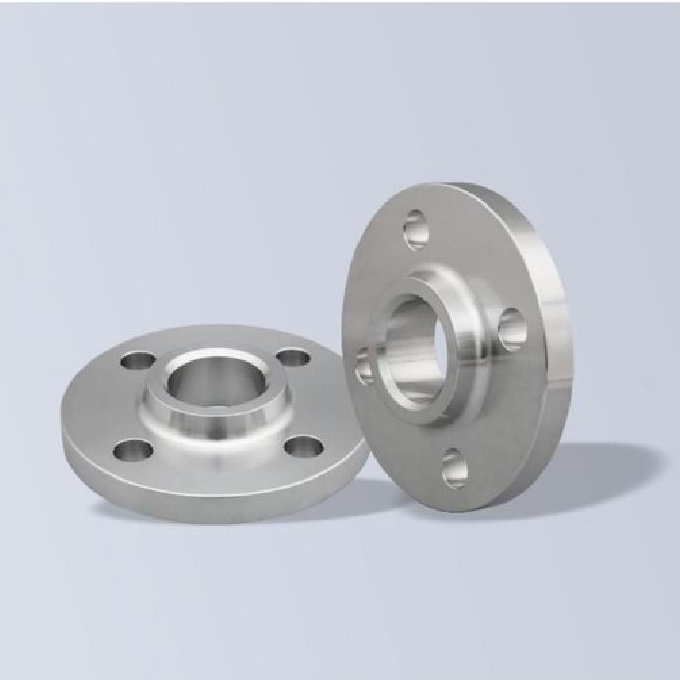
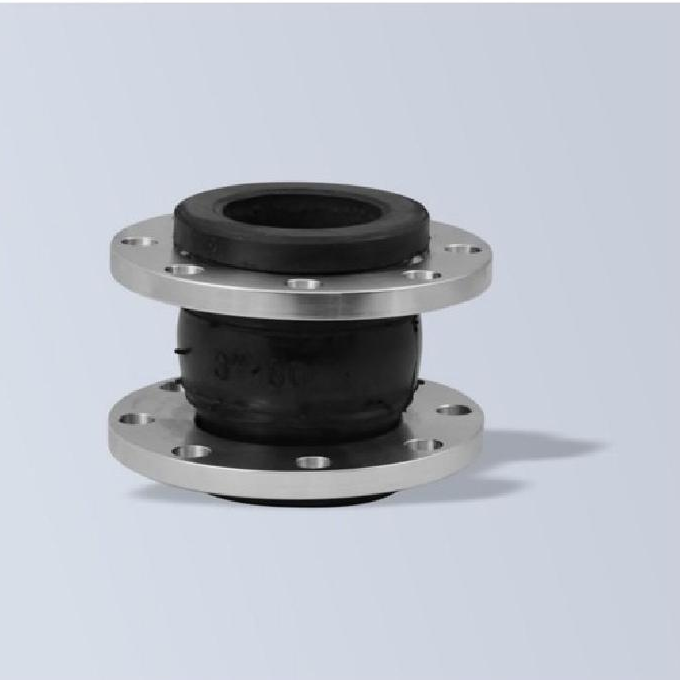
Crevices are rarely intentional. The usual sources are gasket and O-ring seating faces, threaded connections, backing rings and incomplete weld penetration, tube-to-tubesheet gaps, lap joints, and the underside of clamps, brackets, and pipe supports. Just as damaging are the crevices that form in service: scale and mineral deposits, biofilms and marine fouling, and settled solids in low-flow or dead-leg zones. Under-deposit and under-fouling attack behaves exactly like a manufactured crevice, concentrating chlorides and starving the metal of oxygen beneath the deposit.
Fabrication debris counts too. Iron particles smeared from carbon-steel tools, weld spatter, and heat tint left after welding all give corrosion a place to start. Pickling and passivation after fabrication strip the free iron and restore a uniform passive layer, which measurably raises real-world crevice resistance.
Grade Selection by Molybdenum Content
The clearest route to higher crevice resistance is more molybdenum, backed by nitrogen in the duplex grades. The table below lists approximate open-surface CPT values and a qualitative crevice-risk ranking to steer selection; read them as comparative guidance, not design limits for a specific fluid.
| Grade | Approx. CPT (deg C, G48) | Relative Crevice Risk |
| 304/304L | 0-5 | High in any chloride service |
| 316/316L (~2.1% Mo) | 15-20 | Moderate; limited seawater use |
| 317L (~3-4% Mo) | 25-35 | Lower; better warm chloride tolerance |
| Duplex 2205 (~3% Mo, N) | 35-45 | Low; strong in brine and seawater |
| Super duplex 2507 (~4% Mo, N) | 55-70 | Very low; severe seawater service |
For ambient, low-chloride water, 304L is usually fine. Once chlorides, warmth, or gasketed joints enter the picture, 316L is the sensible baseline and 317L a modest step up. For seawater, produced water, and bleach or brine circuits, duplex 2205 and super duplex 2507 give the margin austenitic grades cannot. Wenqiang supplies all of these in seamless and welded form to ASTM A312, A213, A269, A790, and A928, with EN 10204 3.1 or 3.2 material test certificates and PREN verification available on request.
Design to Avoid Crevices
Alloy upgrades go to waste if the geometry still traps stagnant fluid, so good practice starts at the drawing board. Favor full-penetration butt welds over gasketed flanges and lap joints where you can, grind welds smooth, and steer clear of backing rings that leave a root gap. Seal or continuously weld the underside of supports and attachments instead of leaving tack-welded lap crevices. Specify gaskets and O-rings that seat fully, and use crevice-tolerant sealing faces.
On the operating side, keep flow up to prevent settling, get rid of dead legs, and design for full drainage so chlorides cannot concentrate during shutdowns. Cleaning to remove scale and biofilm interrupts under-deposit attack, and routine inspection of flange faces, tube ends, and support contacts catches early staining before it perforates. Where a crevice genuinely cannot be avoided, compensate by moving up the molybdenum ladder.
Practical Takeaways
Crevice corrosion is predictable and preventable. Remember that gaps, deposits, and fouling create acidified, oxygen-starved cells that attack well below open-surface temperature limits. Rank candidate alloys by molybdenum and PREN, use CCT-style data rather than CPT alone for gasketed hardware, and engineer joints and supports to shed fluid instead of trapping it. The right grade, a crevice-free design, and proper post-fabrication passivation together give you stainless piping that lasts for decades in chloride-laden service.
Frequently Asked Questions
Q: Why does crevice corrosion start at a lower temperature than pitting?
A: A crevice cuts off the oxygen needed to repair the passive film and lets chlorides and acid concentrate inside the gap, so attack begins under milder conditions than open-surface pitting, reflected in a Critical Crevice Temperature well below the Critical Pitting Temperature.
Q: Is 316L enough to stop crevice corrosion in seawater?
A: Usually no. With about 2.1% molybdenum, 316L is prone to crevice attack in warm seawater and under gaskets or deposits; duplex 2205 or super duplex 2507 provide the molybdenum and nitrogen margin needed for reliable seawater service.
Talk to Wenqiang about crevice-resistant grade selection and crevice-free piping design: +86 577 8922 2595 / https://www.chinawqsteel.com/

Copyright © 2026 Strongwin Stainless Steel Group Co., Ltd. All rights reserved. - Privacy Policy
 EN
EN
 Hot News