Duplex 2205 stainless steel pipe costs more than 316L, recently around 4,500-4,600 RMB per ton more in the Chinese market, yet in chloride-rich, high-pressure service it often ends up cheaper to own over the life of the line. The reasons are mechanical and metallurgical: 2205 gives you roughly twice the yield strength of 316L and far more resistance to chloride pitting and stress corrosion cracking. That extra strength lets you use thinner walls and less metal for the same pressure rating, which claws back part of the premium, and the corrosion resistance stretches service life while cutting the cost of leaks, unplanned shutdowns, and replacement. Price the installed and lifetime cost instead of the per-ton invoice and the dearer grade is frequently the cheaper call.
Why 2205 Costs More Up Front
Duplex 2205 has a two-phase microstructure, roughly half austenite and half ferrite, built from about 22% chromium, 5-6% nickel, and around 3% molybdenum, with controlled nitrogen. That chemistry is harder to produce and heat-treat than plain austenitic 316L, and the high chromium and molybdenum push up the raw-metal cost. Hence the premium of roughly 4,500-4,600 RMB per ton over 316L in recent Chinese market conditions. One quirk works in the buyer's favor: 2205 uses less nickel than 316L, so it feels a nickel spike less sharply even while its molybdenum and chromium keep it in premium territory.
The Strength Advantage Changes the Math
The number that matters most on 2205 is yield strength. 316L offers a minimum around 170-205 MPa; 2205 delivers roughly 450 MPa, better than double. In pressure pipe, wall thickness follows strength, so a stronger material holds the same pressure with a thinner wall. A thinner wall means less metal per meter, which trims weight, supports, and sometimes freight, and recovers part of the per-ton premium right at installation.
The lighter pipe also handles more easily and can cut structural and support costs on demanding jobs, offshore platforms and elevated process racks among them, where every kilogram carries a structural penalty.
Corrosion Resistance and Service Life
The second edge is corrosion performance. The pitting resistance equivalent number (PREN) gauges resistance to localized chloride attack. 316L usually lands around 24-25; 2205 reaches roughly 35 or higher. In seawater, brackish water, and chloride-bearing process streams, that gap buys far more resistance to pitting and, more to the point, to chloride stress corrosion cracking, a failure mode austenitic 316L is prone to at elevated temperatures.
Hold off those failure modes and the pipe simply lasts longer. Where an aggressive service might chew through 316L in a handful of years, 2205 can run well beyond that, sparing you the piling-up costs of downtime, inspection, and rework.
A Side-by-Side Comparison
| Property | 316L | Duplex 2205 |
| Min yield strength | ~170-205 MPa | ~450 MPa |
| PREN (pitting resistance) | ~24-25 | ~35+ |
| Wall / weight for same duty | Thicker / heavier | Thinner / lighter |
| Relative price per ton | Baseline | ~4,500-4,600 RMB higher |
| Service life in chlorides | Shorter | Substantially longer |
A TCO Reasoning Example
Take a chloride-exposed process line. Say 316L sits at a baseline per-ton price and 2205 runs roughly 4,500-4,600 RMB more per ton. Two effects chip away at that premium right away. Because 2205 can use a thinner wall for the same pressure, you buy fewer tons of metal for the same run, so the effective premium shrinks. And the lighter pipe cuts supports and handling.
Now stretch the timeline out. If the 316L line is genuinely at risk of chloride stress corrosion cracking and has to be replaced before the plant's design horizon, its real cost includes at least one full replacement plus the downtime, lost production, and labor that come with it. One unplanned shutdown in a continuous process can dwarf the original piping premium. If 2205 dodges that event by lasting the full design life, the higher purchase price pays for itself many times over. The rule of thumb is plain: high failure cost plus chlorides, and the premium grade usually wins on TCO.
Put numbers to it. Picture a modest run of pipe where the 2205 premium adds a five-figure sum to the order. Weigh that against what 2205 helps you skip: periodic inspection campaigns, coupon testing, localized repairs of pitted sections, and the standing risk of an outage. In continuous plants, lost production during even a short forced shutdown often runs into the tens of thousands per day, so heading off a single event over the asset's life can swamp the whole alloy premium. Factor in the lighter inspection load a more corrosion-resistant material brings, and the premium is frequently back in your pocket within the first maintenance cycle, not over decades. That's why capital and reliability engineers keep moving to lifetime cost over first cost.
When 2205 Is Not the Answer
2205 is not a blanket upgrade. In mild, non-chloride service, 304L or 316L can cover the corrosion duty at lower cost and the premium is simply wasted. 2205 also has an upper temperature limit for prolonged service, because its ferrite phase can embrittle, so very high-temperature work may point to other grades. Welding and fabrication need correct procedures and controlled heat input to hold the austenite-ferrite balance. Evaluate it against the specific duty rather than applying a rule of thumb.
Making the Call With Confidence
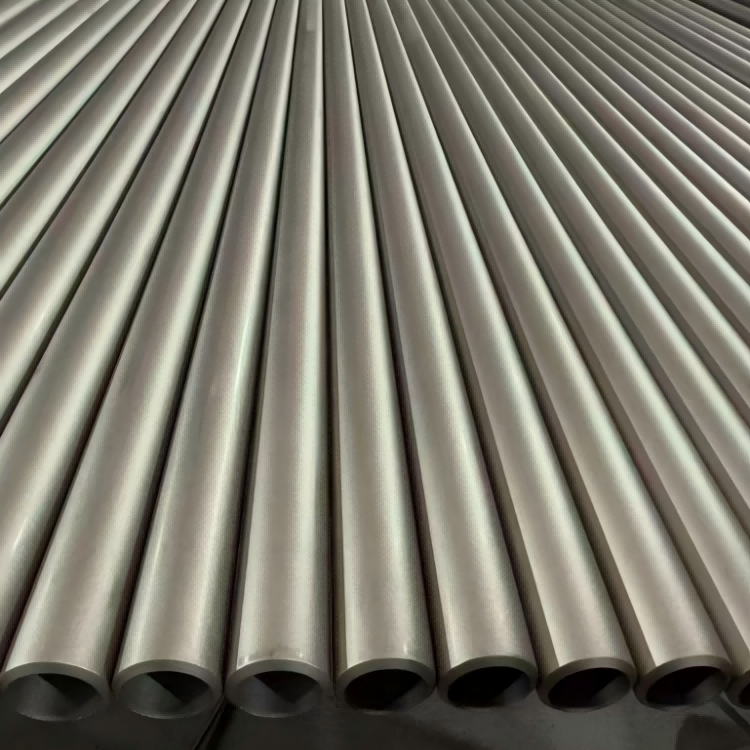
Specifying 2205 well rests on properties you can trust and fabrication done right. Wenqiang supplies duplex 2205 seamless and welded pipe to ASTM A790 and A928, with EN 10204 3.1/3.2 mill test certificates documenting chemistry and mechanical properties, plus in-house PMI, hydrostatic, and non-destructive testing to confirm each heat. With verified yield strength and PREN in hand, an engineer can size thinner walls with confidence and defend the premium on total cost rather than purchase price, which is how a higher invoice turns into a lower lifetime cost.
Frequently Asked Questions
Q1: How much more does duplex 2205 cost than 316L?
A: In recent Chinese market conditions the premium has been roughly 4,500-4,600 RMB per ton, though thinner walls for the same pressure reduce the effective premium.
Q2: Why can a more expensive 2205 pipe be cheaper overall?
A: Its roughly double yield strength allows thinner, lighter walls, and its higher PREN resists chloride pitting and stress corrosion cracking, so it lasts longer and avoids costly failures.
Q3: When should I not choose 2205?
A: In mild, non-chloride service where 304L or 316L suffices, or in very high-temperature applications where duplex ferrite can embrittle.
Get a duty-matched duplex 2205 recommendation and certified TCO comparison from Wenqiang: call +86 577 8922 2595 or visit https://www.chinawqsteel.com/

Copyright © 2026 Strongwin Stainless Steel Group Co., Ltd. All rights reserved. - Privacy Policy
 EN
EN
 Hot News