 EN

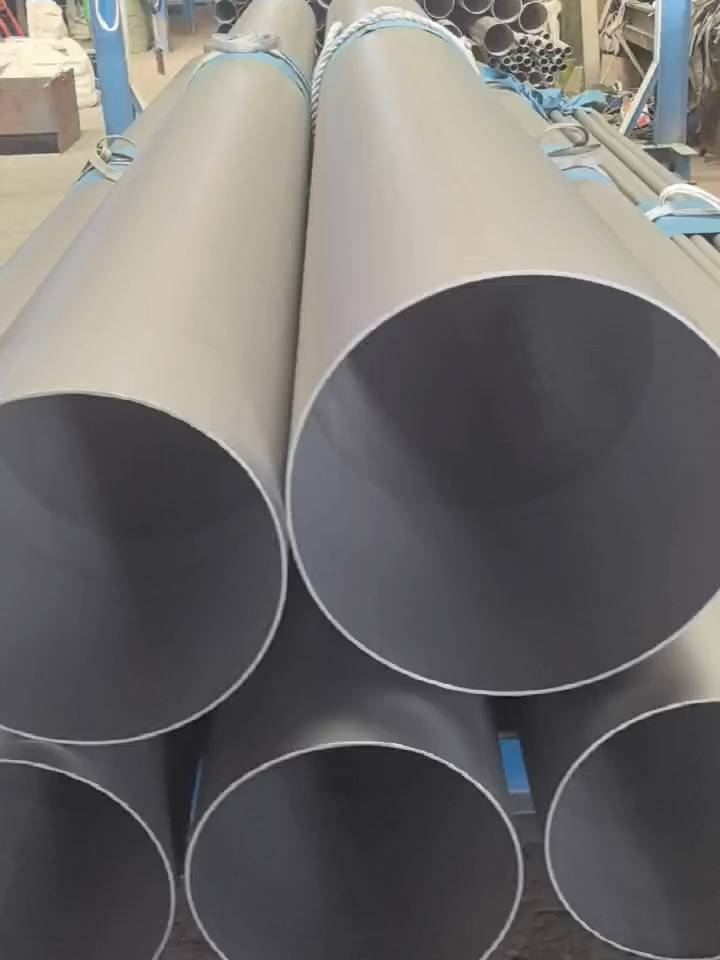
Heavy duty pipelines form the backbone of modern industrial infrastructure, transporting critical fluids under extreme pressure and temperature conditions. The reliability of these systems depends entirely on the materials used, and large diameter seamless pipe has emerged as the gold standard for applications requiring uncompromising performance and structural integrity. Unlike welded alternatives, large diameter seamless pipe eliminates weak points at seams, providing uniform strength throughout the entire length of the tube.
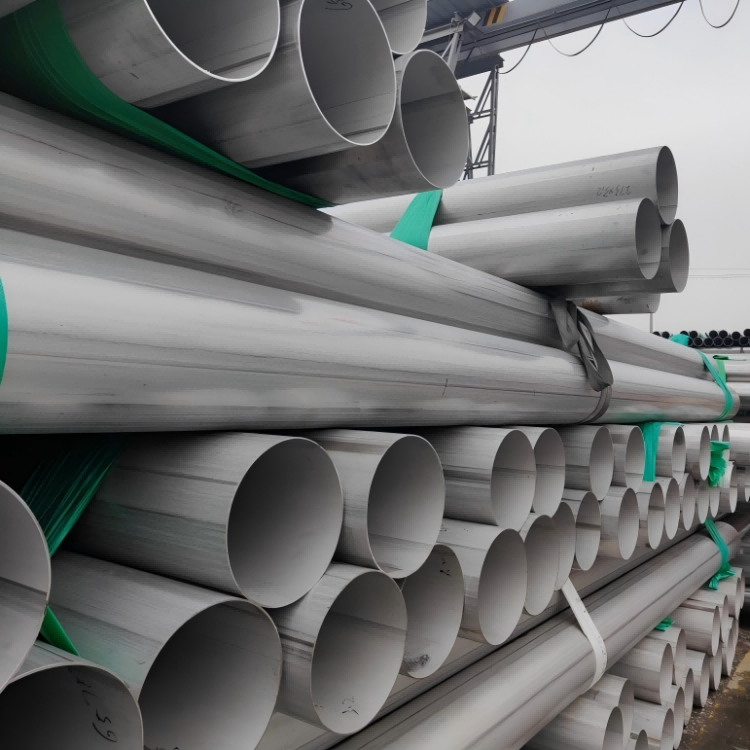
When industrial operations demand maximum uptime and safety, large diameter seamless pipe delivers results that justify the investment. This article explores how these specialized tubes support heavy duty pipelines, the engineering principles behind their performance, and why they remain the preferred choice across oil and gas, chemical processing, power generation, and water treatment industries.
Structural Advantages of Large Diameter Seamless Pipe
Eliminating Weld Vulnerabilities
Welded pipes introduce potential failure points at each joint, where material properties can differ from the base metal and stress concentrations naturally develop. Large diameter seamless pipe avoids this problem entirely through a manufacturing process that creates a continuous, uninterrupted tube wall. The absence of weld seams means there are no heat-affected zones that might exhibit reduced strength or corrosion resistance compared to the surrounding material.
For heavy duty pipelines operating under cyclic loading or fluctuating pressures, this seamless construction becomes critical. Fatigue cracks often initiate at weld toes or beneath surface residual stresses left by the welding process. Large diameter seamless pipe eliminates these initiation sites, extending service life and reducing the risk of catastrophic failure in mission-critical applications where downtime costs thousands of dollars per hour.
Uniform Wall Thickness and Pressure Handling
Manufacturing large diameter seamless pipe through hot extrusion or cold drawing processes ensures consistent wall thickness across the entire circumference and length. This uniformity is essential for heavy duty pipelines because it distributes internal pressure evenly across the tube cross-section. Any deviation in wall thickness creates stress concentration zones where failures are more likely to initiate and propagate.
The predictable geometry of large diameter seamless pipe allows engineers to calculate burst pressures and operating safety margins with greater confidence. When designing systems that must handle pressures exceeding several thousand psi, this precision in dimensional control becomes invaluable. Quality assurance testing on large diameter seamless pipe typically includes ultrasonic thickness measurements to verify compliance with specifications throughout the production run.
Material Properties Supporting Heavy Duty Performance
Strength and Toughness Optimization
Large diameter seamless pipe can be manufactured from a wide range of alloy compositions tailored to specific application requirements. Carbon steel versions provide cost-effective solutions for moderate pressure systems, while stainless steel and nickel alloy variants excel in corrosive or high-temperature environments. The seamless manufacturing process preserves the inherent properties of these materials without introducing metallurgical discontinuities that welding might create.
Heavy duty pipelines often transport fluids at elevated temperatures or in chemically aggressive environments where material degradation occurs rapidly. Large diameter seamless pipe made from premium alloys resists sulfidic corrosion, hydrogen attack, and stress corrosion cracking far better than welded alternatives. The absence of weld residual stresses in large diameter seamless pipe further reduces susceptibility to stress-assisted corrosion mechanisms that commonly affect welded systems.
Thermal and Mechanical Expansion Control
Temperature changes in heavy duty pipelines create thermal stresses that welded designs often manage poorly because weld zones have different expansion coefficients than base metal. Large diameter seamless pipe exhibits uniform thermal response throughout its length, allowing simpler and more reliable pipe support system design. Expansion loops and flexibility requirements can be calculated more accurately when material behavior is predictable across the entire pipe.
For cryogenic applications or systems cycling between extreme temperature ranges, large diameter seamless pipe demonstrates superior reliability because thermal stresses develop uniformly rather than concentrating at weld locations. This becomes especially important in offshore operations or arctic environments where thermal cycling is severe and maintenance access is difficult.
Performance in Challenging Industrial Environments
Corrosion Resistance and Service Life Extension
Large diameter seamless pipe constructed from stainless steel or corrosion-resistant alloys can operate decades longer than carbon steel alternatives in aggressive applications. The continuous tube structure prevents crevice corrosion from forming beneath weld deposits or scale, a common failure mechanism in welded pipelines operating in salty or chemically active environments. In heavy duty offshore platforms or chemical plants, this extended service life translates directly to reduced total cost of ownership despite higher initial material costs for large diameter seamless pipe.
Internal corrosion by produced water or pipeline fluid chemistry is also minimized with large diameter seamless pipe because there are no weld beads or surface irregularities where corrosive substances accumulate and accelerate localized attack. Pigging operations and chemical inhibitor treatments are more effective in systems using large diameter seamless pipe because flow patterns remain consistent throughout the diameter.
Regulatory Compliance and Quality Assurance
Most jurisdictions require rigorous testing and certification for heavy duty pipelines, particularly those handling hazardous fluids or operating at high pressures. Large diameter seamless pipe typically meets or exceeds American Society of Mechanical Engineers standards, including ASME B36.10M specifications for dimensional accuracy and pressure ratings. Hydrostatic testing of large diameter seamless pipe verifies structural integrity without the weaknesses that might emerge during pressure testing of welded systems.
Documentation of large diameter seamless pipe manufacturing records, including heat number traceability, chemical composition verification, and mechanical property test results, satisfies regulatory inspection requirements more easily than welded alternatives. When facilities must demonstrate compliance with process safety management regulations or undergo third-party inspections, the superior track record of large diameter seamless pipe provides documentation advantages that reduce audit findings and corrective action requirements.
FAQ
Why is large diameter seamless pipe more expensive than welded pipe?
Large diameter seamless pipe commands higher material costs because the manufacturing process is more energy-intensive and produces more scrap material than welded pipe production. However, the extended service life, reduced maintenance requirements, lower inspection costs, and elimination of weld-related failures often justify the higher initial investment when considering total cost of ownership over the pipeline's operational lifetime.
Can large diameter seamless pipe be used in all heavy duty pipeline applications?
Large diameter seamless pipe works well for most heavy duty applications, but certain niche uses may employ welded alternatives when cost considerations are paramount or when design temperatures and pressures fall within ranges where welded construction demonstrates adequate performance. However, for critical systems where reliability and safety are non-negotiable, large diameter seamless pipe remains the preferred choice across virtually all major industries.
How does large diameter seamless pipe improve pipeline safety?
Large diameter seamless pipe improves safety by eliminating weld-related failure initiation sites, providing more predictable structural behavior, and demonstrating superior resistance to fatigue crack growth under cyclic loading. The continuous tube structure also resists through-wall corrosion and pitting that might lead to pinhole leaks in welded systems, reducing the risk of unexpected ruptures and environmental contamination in heavy duty industrial pipelines.