 EN
EN

Introduction
Pipeline service life is an important consideration for industries that transport water, chemicals, oil, gas, steam, food products, and other fluids. Pipeline failure can lead to leakage, production downtime, environmental risks, maintenance expenses, and costly replacement projects.
Selecting the right pipe material and manufacturing process is one of the most important ways to improve long-term pipeline performance. Seamless stainless steel pipe is widely used in demanding applications because it combines corrosion resistance, structural strength, pressure performance, and material consistency.
Unlike welded pipe, seamless stainless steel pipe is manufactured without a longitudinal welded seam. This construction can provide advantages in applications involving high pressure, temperature changes, corrosive media, and mechanical stress.
However, seamless stainless pipe does not automatically guarantee a longer service life. Its performance depends on the stainless steel grade, pipe dimensions, manufacturing quality, operating conditions, installation, and maintenance practices.
1. What Is Seamless Stainless Steel Pipe?
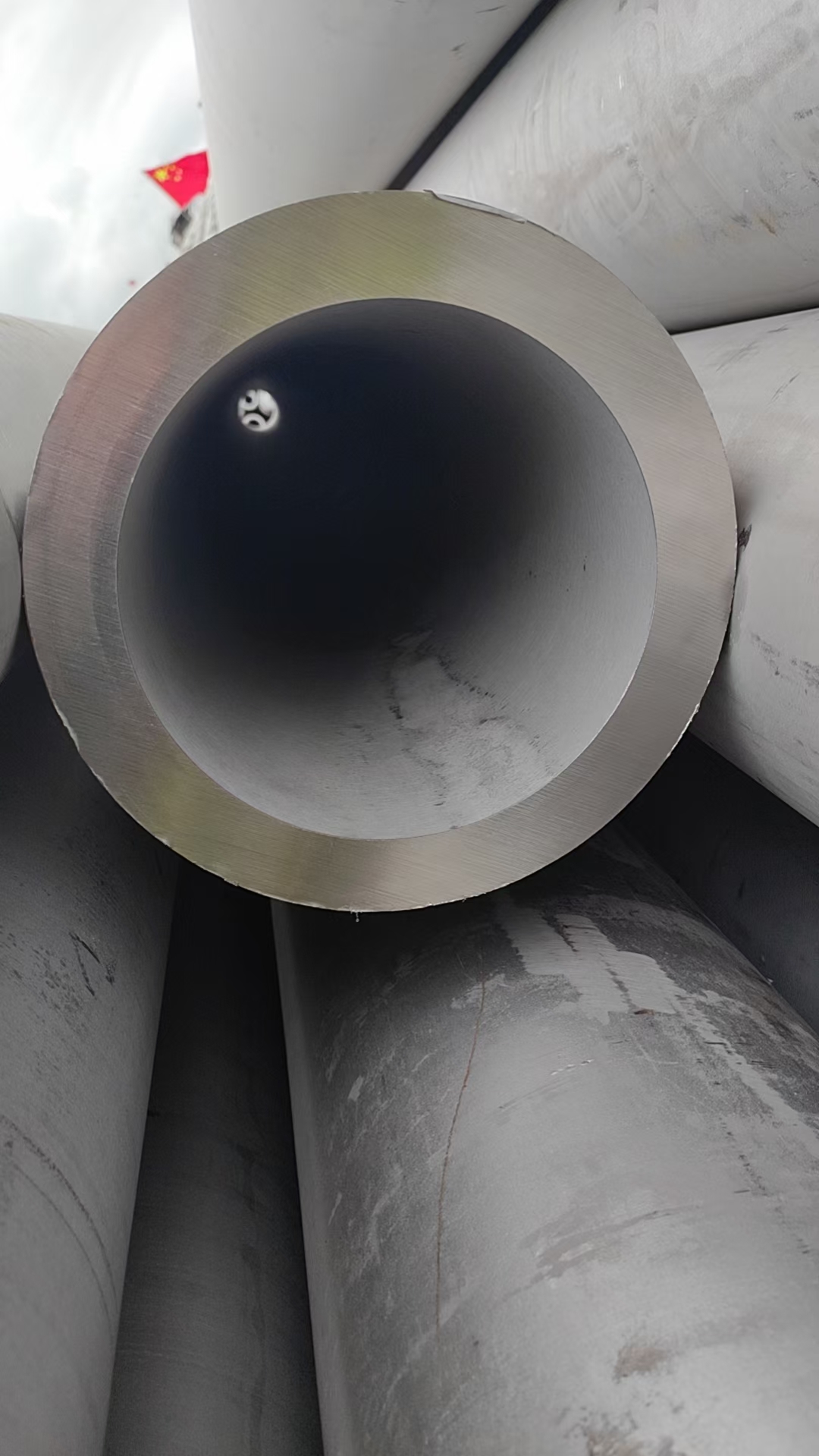
Seamless stainless steel pipe is produced from a solid steel billet. The billet is heated and pierced to create a hollow tube, which is then processed to achieve the required diameter, wall thickness, length, and surface condition.
Because the pipe is formed without a longitudinal welded joint, it has a continuous material structure around its circumference.
Common stainless steel grades include:
- 304 stainless steel
- 304L stainless steel
- 316 stainless steel
- 316L stainless steel
- 321 stainless steel
- 310S stainless steel
- 317L stainless steel
- Duplex stainless steel
- Super duplex stainless steel
Each grade provides different levels of corrosion resistance, temperature performance, strength, and chemical compatibility.
The correct grade should be selected according to the transported medium, operating temperature, pressure, and applicable engineering requirements.
2. Reduced Risk of Weld-Related Weakness
One potential advantage of seamless pipe is the absence of a longitudinal welded seam.
In welded pipe, the weld area may require careful control of:
- Welding parameters
- Heat input
- Weld penetration
- Heat-affected zone performance
- Post-weld treatment
- Weld inspection
- Surface finishing
A poorly controlled weld may become a potential location for corrosion, cracking, fatigue, or leakage under certain operating conditions.
Seamless pipe eliminates the longitudinal weld from the pipe body. This can simplify the risk assessment for applications where weld integrity is especially important.
However, seamless pipe can still contain other manufacturing imperfections or defects. It must therefore be produced and inspected according to the required quality standards.
3. Better Suitability for High-Pressure Applications
Pipelines used in oil and gas, chemical processing, power generation, and industrial equipment may operate under high internal pressure.
Seamless stainless steel pipe is often selected for these applications because its continuous structure can support demanding pressure conditions when the pipe is correctly designed and manufactured.
Important factors include:
- Outside diameter
- Wall thickness
- Stainless steel grade
- Yield strength
- Tensile strength
- Operating temperature
- Internal pressure
- External loads
- Safety factors
- Applicable design codes
A thicker wall may improve pressure resistance, but it can also increase weight and material cost. Pipe selection should therefore be based on engineering calculations rather than general assumptions.
For B2B buyers, the supplier should provide clear information about the pipe dimensions, material grade, pressure requirements, and relevant inspection documents.
4. Strong Corrosion Resistance
Corrosion is one of the main causes of pipeline deterioration. It can reduce wall thickness, create pits, weaken fittings, and eventually cause leakage or failure.
Stainless steel contains chromium, which helps form a thin passive oxide layer on the surface. This layer can provide protection against many corrosive environments.
The level of corrosion resistance depends on the stainless steel grade and the operating medium.
For example:
- 304 stainless steel may be suitable for many general industrial and water-related applications.
- 316 and 316L stainless steel generally provide improved resistance to chloride-related corrosion compared with 304 grades.
- Duplex stainless steel may be selected for applications requiring higher strength and enhanced corrosion resistance.
- Specialized grades may be required for highly aggressive chemicals or elevated temperatures.
Stainless steel is not resistant to every environment. Chlorides, stagnant conditions, high temperatures, acidic media, and contamination may create specific corrosion risks.
Material selection should therefore be based on the actual chemical composition and operating conditions.
5. Improved Resistance to Pitting and Crevice Corrosion
Pitting corrosion is a localized form of corrosion that creates small holes in the metal surface. Although the visible surface damage may appear limited, pits can penetrate deeply and reduce pipe integrity.
Crevice corrosion can occur in narrow gaps where stagnant liquid, deposits, or low oxygen conditions develop.
These forms of corrosion may be important in:
- Marine systems
- Water treatment
- Chemical processing
- Heat exchangers
- Food processing
- Offshore facilities
- Coastal industrial plants
Choosing a stainless steel grade with suitable corrosion resistance can help reduce these risks.
For chloride-containing environments, buyers may consider higher-alloy stainless steel or duplex grades where appropriate. The final choice should be confirmed by corrosion evaluation and engineering requirements.
Proper design is also important. Avoiding unnecessary crevices, stagnant zones, deposits, and poor drainage can improve the performance of the pipeline system.
6. Better Performance Under Temperature Changes
Industrial pipelines may experience repeated heating and cooling. Temperature changes can create expansion, contraction, thermal stress, and dimensional movement.
Seamless stainless steel pipe can be used in applications involving temperature variation when the selected grade and design are suitable.
Potential applications include:
- Steam systems
- Heat exchangers
- Boiler equipment
- Chemical processing
- Food processing
- Refrigeration systems
- Thermal oil systems
- Power generation
The pipe must be selected according to:
- Operating temperature
- Thermal expansion
- Pressure at operating temperature
- Thermal cycling frequency
- Support arrangement
- Insulation
- Connection design
Stainless steel grade selection is particularly important for high-temperature applications. Some grades provide better resistance to oxidation, creep, or thermal degradation than others.
7. High Mechanical Strength and Structural Stability
Pipeline service life depends not only on corrosion resistance but also on mechanical strength.
Pipes may be exposed to:
- Internal pressure
- External pressure
- Vibration
- Bending
- Impact
- Transportation loads
- Thermal stress
- Support loads
- Repeated pressure cycles
Seamless stainless steel pipe can provide reliable structural performance when the material grade and wall thickness are correctly selected.
High-strength grades may allow engineers to meet pressure requirements with a suitable wall thickness. Duplex stainless steel, for example, may offer higher strength than many standard austenitic stainless steel grades.
However, higher strength does not automatically mean better performance in every application. Corrosion resistance, weldability, toughness, temperature performance, and cost must also be considered.
8. Reduced Leakage Risk
Pipeline leakage can result from corrosion, cracks, damaged connections, excessive pressure, mechanical damage, or poor installation.
The absence of a longitudinal weld in seamless pipe can remove one potential source of weld-related leakage. This may be valuable in applications where leakage could cause:
- Product loss
- Environmental damage
- Safety hazards
- Production interruption
- Cleaning costs
- Equipment damage
Nevertheless, pipeline leakage can also occur at:
- Flanges
- Valves
- Elbows
- Gaskets
- Threaded connections
- Circumferential welds
- Mechanical joints
- Damaged sections
A seamless pipe body must therefore be combined with reliable fittings, proper installation, and suitable inspection procedures.
9. Better Fatigue Performance in Certain Applications
Repeated pressure changes, vibration, and thermal cycling can create fatigue stress in pipeline systems.
Fatigue failure may develop gradually after repeated loading, especially around stress concentrations, joints, defects, or damaged surfaces.
A seamless pipe body can reduce the number of potential stress concentration areas associated with a longitudinal weld. This may provide an advantage in certain cyclic loading conditions.
However, fatigue performance depends on the complete pipeline system, including:
- Pipe geometry
- Wall thickness
- Surface condition
- Pressure cycles
- Temperature cycles
- Support design
- Vibration
- Connection details
- Installation quality
Engineers should evaluate the full system rather than selecting seamless pipe based only on its manufacturing method.
10. Smooth Internal Surface and Flow Performance
The internal surface condition of a pipe can influence fluid flow, cleaning, pressure loss, and the accumulation of deposits.
Seamless stainless steel pipe can be manufactured with a smooth internal surface, depending on the production process and finishing requirements.
A suitable internal surface may help:
- Reduce areas where deposits accumulate
- Support easier cleaning
- Improve hygiene
- Reduce contamination risks
- Support stable flow
- Simplify maintenance
This is particularly important for:
- Food and beverage processing
- Pharmaceutical production
- Dairy systems
- Water treatment
- Chemical processing
- Clean utility systems
Surface roughness requirements should be clearly specified. A standard industrial pipe and a highly polished sanitary tube are not the same product and should not be treated as interchangeable.
11. Suitability for Hygienic Applications
Stainless steel is widely used in food, beverage, pharmaceutical, and biotechnology industries because suitable grades can provide corrosion resistance and cleanable surfaces.
Seamless stainless steel pipe may be used in hygienic systems where the design requires:
- Smooth internal surfaces
- Low contamination risk
- Easy cleaning
- Suitable corrosion resistance
- Reliable connections
- Material traceability
For hygienic applications, the pipe alone is not enough. The full system must be designed to prevent contamination and support cleaning.
Important considerations may include:
- Internal surface finish
- Pipe grade
- Sanitary fittings
- Drainability
- Dead-leg control
- Cleaning method
- Sterilization conditions
- Product-contact requirements
Buyers should confirm whether the pipe meets the applicable sanitary and food-contact requirements for their industry and destination market.
12. Reduced Maintenance Requirements
Corrosion-resistant stainless steel pipe may require less frequent replacement or repair than less suitable materials in certain environments.
Potential maintenance benefits include:
- Reduced corrosion-related repairs
- Longer intervals between replacements
- Lower risk of wall-thickness loss
- Easier cleaning
- Reduced coating requirements
- Better long-term appearance
- More stable performance
However, maintenance requirements still depend on the operating environment.
Stainless steel pipelines should be inspected for:
- Surface corrosion
- Pitting
- Cracking
- Discoloration
- Deposits
- Mechanical damage
- Leakage
- Support problems
- Unexpected pressure changes
Regular inspection can identify problems before they become serious.
13. Better Long-Term Cost Performance
The initial purchase price of seamless stainless steel pipe may be higher than some alternative materials. However, the total cost of ownership may be more favorable in demanding applications.
Long-term cost factors include:
- Purchase price
- Installation cost
- Maintenance
- Corrosion protection
- Downtime
- Replacement frequency
- Product loss
- Cleaning
- Inspection
- Disposal
A pipe with stronger corrosion resistance and suitable mechanical performance may reduce the risk of unexpected repairs and production interruptions.
For industrial buyers, the correct comparison should include the expected service life and operating risks rather than only the initial material price.
14. Importance of Correct Stainless Steel Grade Selection
Choosing the wrong grade can significantly reduce pipeline service life.
304 Stainless Steel
304 is widely used for general industrial, architectural, food, and water-related applications. It may be suitable for many moderate environments.
316L Stainless Steel
316L contains molybdenum and is commonly selected where improved resistance to chloride-related corrosion is needed. It is often considered for chemical, marine, food, and pharmaceutical applications.
321 Stainless Steel
321 is stabilized with titanium and may be considered for certain elevated-temperature applications.
310S Stainless Steel
310S is designed for applications requiring high-temperature performance and oxidation resistance.
Duplex Stainless Steel
Duplex grades may provide a combination of high strength and corrosion resistance. They may be used in demanding chemical, marine, oil, and gas applications.
The final grade should be selected based on the actual service conditions, not only on general product descriptions.
15. Quality Control Helps Ensure Long Service Life
Even the correct material grade may perform poorly if manufacturing quality is inconsistent.
A reliable seamless stainless steel pipe supplier should maintain quality control throughout production.
Important checks may include:
- Raw material verification
- Chemical composition analysis
- Dimensional inspection
- Wall thickness measurement
- Surface inspection
- Tensile testing
- Hardness testing
- Flattening testing
- Flaring testing where applicable
- Hydrostatic testing
- Ultrasonic testing
- Eddy current testing
- Heat treatment verification
- Marking and traceability
The required inspections depend on the product specification, industry, and applicable standard.
B2B buyers should request relevant quality documents, such as:
- Material test certificates
- Inspection reports
- Heat numbers
- Chemical composition records
- Mechanical test results
- Non-destructive testing records
- Dimensional inspection reports
16. Proper Installation Is Essential
A high-quality seamless pipe can still fail if installation is poorly controlled.
Installation factors that influence service life include:
- Pipe alignment
- Support spacing
- Thermal expansion control
- Correct welding procedures
- Proper flange alignment
- Suitable gasket selection
- Cleanliness
- Drainage
- Pressure testing
- Protection from external damage
Although seamless pipe has no longitudinal weld, pipeline systems often require welded joints during installation. These joints must be completed by qualified personnel using suitable procedures.
Contamination from carbon steel tools or improper handling may also create surface problems on stainless steel. Proper storage, cleaning, and installation practices are important.
17. Operating Conditions Must Be Controlled
Pipeline service life is influenced by the actual operating environment.
Important conditions include:
- Fluid composition
- Chloride concentration
- Acidity or alkalinity
- Operating temperature
- Internal pressure
- Flow velocity
- Oxygen content
- Moisture
- Deposits
- Stagnation
- Cleaning chemicals
A stainless steel grade that performs well in one environment may not be suitable for another.
For example, high chloride levels, stagnant water, and elevated temperatures may increase corrosion risks. A pipeline design should therefore consider the worst expected operating conditions rather than only normal conditions.
18. Common Applications of Seamless Stainless Steel Pipe
Seamless stainless steel pipe may be used in:
Oil and Gas
- Process piping
- High-pressure lines
- Gas transportation
- Offshore equipment
- Refining systems
Chemical Processing
- Corrosive fluid transport
- Reactor systems
- Heat exchangers
- Chemical storage connections
- Industrial processing lines
Power Generation
- Steam systems
- Boiler-related equipment
- High-temperature piping
- Cooling systems
- Utility lines
Food and Beverage
- Product transfer
- Cleaning systems
- Dairy processing
- Beverage production
- Hygienic utilities
Pharmaceutical and Biotechnology
- Clean water systems
- Process piping
- Sanitary equipment
- Clean utility systems
- Sterile processing areas
Water Treatment
- Water transfer
- Desalination
- Wastewater treatment
- Chemical dosing systems
- Corrosive water applications
19. Seamless Pipe Versus Welded Pipe
Both seamless and welded stainless steel pipes can be valuable in industrial applications.
Seamless Stainless Steel Pipe
Potential advantages include:
- No longitudinal welded seam
- Suitable for many high-pressure applications
- Continuous pipe structure
- Strong performance in demanding service conditions
- Useful for specialized industrial applications
Welded Stainless Steel Pipe
Potential advantages include:
- Wide range of available sizes
- Efficient production for many applications
- Competitive cost
- Suitable for many low- and medium-pressure systems
- Useful for structural and general industrial projects
The decision should depend on:
- Pressure
- Temperature
- Corrosion conditions
- Diameter
- Wall thickness
- Industry standard
- Budget
- Availability
- Installation requirements
Seamless pipe is not always the best choice. A properly manufactured welded pipe may be more economical and fully suitable for many applications.
20. How to Choose a Seamless Stainless Steel Pipe Supplier
B2B buyers should evaluate suppliers based on technical capability, quality control, and delivery reliability.
Important criteria include:
- Stainless steel grade availability
- Manufacturing experience
- Product size range
- Applicable standards
- Heat treatment capability
- Non-destructive testing
- Material traceability
- Custom dimensions
- Surface finish options
- Quality documentation
- Production capacity
- Export experience
- Packaging quality
- Delivery performance
Before placing a bulk order, buyers should provide:
- Pipe grade
- Outside diameter
- Wall thickness
- Length
- Quantity
- Operating pressure
- Operating temperature
- Fluid composition
- Surface requirements
- Testing requirements
- Applicable standard
- Destination market
A clear technical specification helps reduce misunderstandings and improves consistency between quotation, sample, and mass production.
Conclusion
Seamless stainless steel pipe can help extend pipeline service life through its continuous pipe structure, corrosion resistance, mechanical strength, pressure performance, and suitability for demanding industrial environments.
It may reduce certain weld-related risks, support high-pressure applications, resist corrosion, and provide reliable performance under temperature changes and repeated operating loads. Its smooth surface and hygienic properties can also make it suitable for food, beverage, pharmaceutical, water treatment, and chemical processing systems.
However, long service life depends on more than selecting seamless pipe. The stainless steel grade, wall thickness, manufacturing quality, installation method, operating conditions, inspection, and maintenance must all be appropriate.
For B2B buyers, the best approach is to work with an experienced stainless steel pipe manufacturer that can provide accurate material selection, consistent production, reliable testing, complete documentation, and customized supply solutions.
When correctly specified and properly installed, seamless stainless steel pipe can help reduce leakage risks, maintenance requirements, downtime, and long-term pipeline replacement costs.
Table of Contents
- Introduction
- 1. What Is Seamless Stainless Steel Pipe?
- 2. Reduced Risk of Weld-Related Weakness
- 3. Better Suitability for High-Pressure Applications
- 4. Strong Corrosion Resistance
- 5. Improved Resistance to Pitting and Crevice Corrosion
- 6. Better Performance Under Temperature Changes
- 7. High Mechanical Strength and Structural Stability
- 8. Reduced Leakage Risk
- 9. Better Fatigue Performance in Certain Applications
- 10. Smooth Internal Surface and Flow Performance
- 11. Suitability for Hygienic Applications
- 12. Reduced Maintenance Requirements
- 13. Better Long-Term Cost Performance
- 14. Importance of Correct Stainless Steel Grade Selection
- 15. Quality Control Helps Ensure Long Service Life
- 16. Proper Installation Is Essential
- 17. Operating Conditions Must Be Controlled
- 18. Common Applications of Seamless Stainless Steel Pipe
- 19. Seamless Pipe Versus Welded Pipe
- 20. How to Choose a Seamless Stainless Steel Pipe Supplier
- Conclusion