 EN
EN

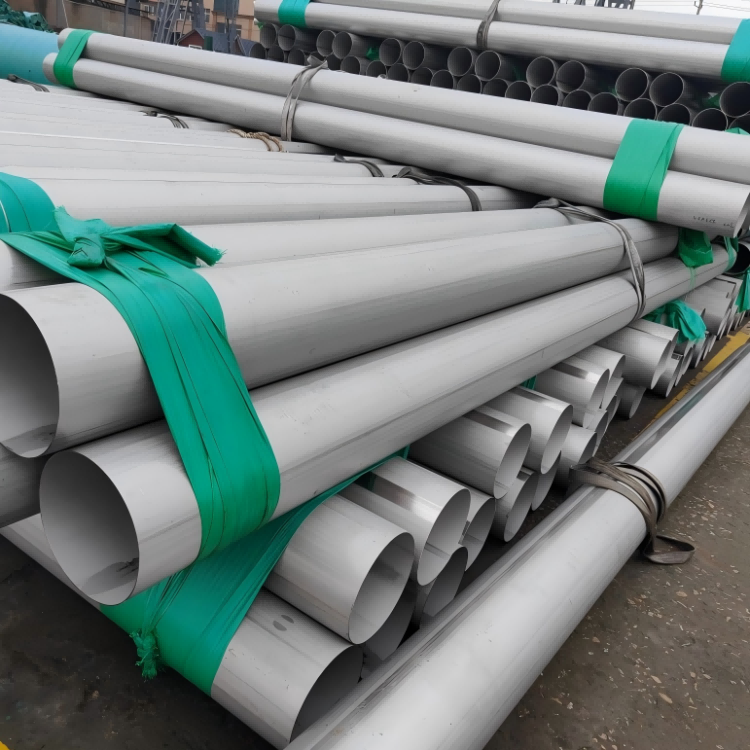
When engineers and procurement specialists evaluate materials for demanding industrial environments, 300 stainless steel consistently emerges as one of the most versatile and reliable choices available. This family of austenitic alloys is recognized across industries for its exceptional corrosion resistance, mechanical strength, and adaptability to a wide range of fabrication processes. Understanding exactly how 300 stainless steel performs in real industrial conditions is essential for making sound material selection decisions that affect both operational efficiency and long-term cost management.
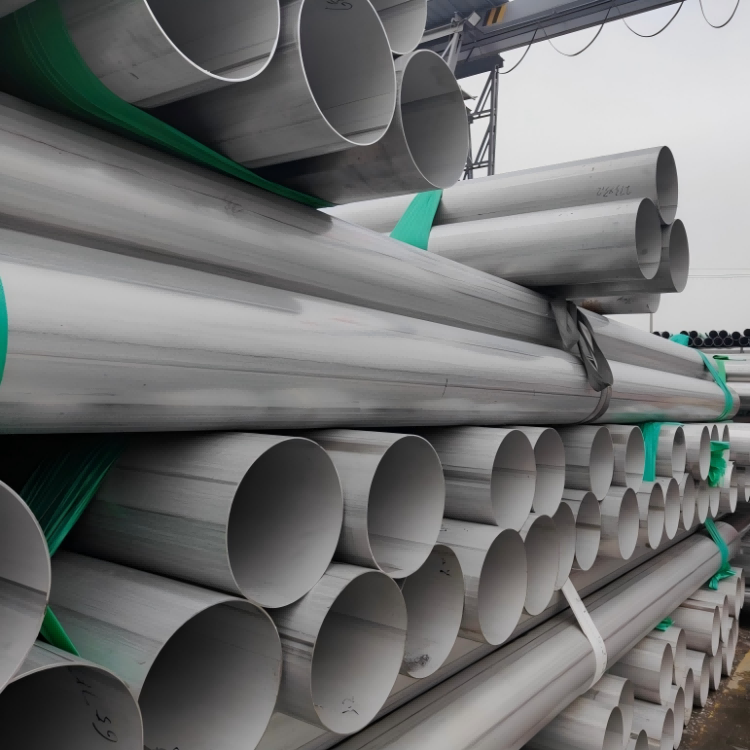
The performance profile of 300 stainless steel is shaped by its austenitic microstructure, which is stabilized primarily through the addition of chromium and nickel. This internal structure gives the material a distinct combination of properties that plain carbon steels and even some other stainless grades simply cannot match. From chemical processing plants and food production facilities to pharmaceutical manufacturing and marine infrastructure, 300 stainless steel delivers measurable performance advantages that justify its widespread industrial adoption.
The Metallurgical Foundation of 300 Stainless Steel Performance
Austenitic Structure and Alloy Composition
The 300 series of stainless steels derives its core performance characteristics from its face-centered cubic crystal structure, known as the austenitic phase. This structure is maintained at room temperature by the presence of sufficient nickel content, typically ranging between 8% and 12%, alongside chromium levels generally above 16%. The combination creates a passive oxide layer on the material surface that continuously self-repairs when exposed to oxygen, providing reliable corrosion protection in most industrial atmospheres.
Within the broader 300 stainless steel family, grades such as 304 and 316 represent the most widely specified options in industrial contexts. Grade 304 is the foundational composition, offering strong general-purpose corrosion resistance. Grade 316 adds molybdenum to the alloy, enhancing resistance to chloride environments and pitting corrosion. This compositional flexibility means that 300 stainless steel can be tailored to match specific environmental challenges without sacrificing the fundamental performance traits of the series.
The non-magnetic nature of 300 stainless steel in its annealed state is another consequence of its austenitic structure. While this property has limited mechanical significance in most industrial applications, it becomes critically important in industries such as electronics manufacturing and medical equipment production, where magnetic interference must be avoided. This characteristic further broadens the industrial relevance of 300 stainless steel beyond purely structural or corrosion-driven applications.
Mechanical Properties Under Industrial Loads
In terms of raw mechanical performance, 300 stainless steel offers a tensile strength typically in the range of 515 to 620 MPa for standard grades, with yield strength around 205 to 310 MPa. These values position 300 stainless steel firmly within the mid-range of structural materials, sufficient for pressure vessels, pipelines, heat exchangers, and supporting frameworks in industrial facilities. The material also demonstrates excellent elongation and toughness, meaning it can absorb impact energy and deform plastically before fracturing, which is a critical safety margin in dynamic load environments.
One of the mechanical behaviors most relevant to industrial applications is work hardening. When 300 stainless steel is subjected to cold working processes, its strength increases significantly due to the strain-induced transformation of austenite to martensite. This characteristic allows fabricators to enhance the strength of 300 stainless steel components during forming operations without requiring additional heat treatment, streamlining manufacturing workflows while achieving higher-performance final products.
Corrosion Resistance Performance Across Industrial Environments
General Atmospheric and Aqueous Corrosion
The defining industrial advantage of 300 stainless steel is its resistance to corrosion across a broad spectrum of environments. In standard atmospheric conditions, including urban, rural, and most industrial atmospheres, 300 stainless steel maintains its surface integrity for decades with minimal maintenance. The chromium oxide passive film that forms naturally on the surface acts as a barrier that prevents further oxidation and chemical attack, making the material inherently self-protecting under most exposure conditions.
In aqueous environments, 300 stainless steel performs reliably against water-based corrosion at neutral to mildly acidic pH levels. Water treatment facilities, desalination plants, and marine-adjacent infrastructure frequently specify 300 stainless steel for piping, tanks, and structural components that must withstand continuous water contact. The molybdenum-enhanced 316 grade within the 300 stainless steel family is particularly effective in environments where chloride concentrations are elevated, such as coastal installations or process streams containing seawater or brine.
Chemical and Acid Resistance in Process Industries
In chemical processing applications, 300 stainless steel demonstrates notable resistance to a wide range of organic acids, dilute mineral acids, and alkaline solutions. This makes it a preferred material for reactors, storage vessels, transfer piping, and heat exchangers in industries such as pharmaceuticals, food and beverage, and specialty chemicals. The consistent chemical resistance of 300 stainless steel reduces the risk of product contamination from metal leaching, which is a critical compliance concern in regulated industries.
However, industrial users must recognize the concentration and temperature limits that define safe usage zones for 300 stainless steel in chemical environments. Highly concentrated sulfuric acid, hydrochloric acid at elevated temperatures, and environments with high chloride levels at elevated temperatures can compromise the passive film and initiate localized corrosion mechanisms such as pitting or crevice corrosion. Understanding these boundaries is essential for engineers specifying 300 stainless steel in aggressive chemical processing duties.
Thermal Performance and Heat-Related Behavior
High-Temperature Oxidation and Creep Resistance
One of the most industrially significant performance characteristics of 300 stainless steel is its ability to retain strength and resist oxidation at elevated temperatures. Standard 304 grade maintains adequate oxidation resistance up to approximately 870 degrees Celsius in continuous service, while 316 grade performs reliably up to similar temperatures. Specialized variants within the 300 stainless steel family, such as 309 and 310, are engineered for even higher temperature service, extending the usable range to over 1000 degrees Celsius.
This thermal stability makes 300 stainless steel a practical choice for furnace components, exhaust systems, heat treatment equipment, and high-temperature piping in petrochemical and power generation facilities. The material resists scaling and surface degradation at elevated temperatures far more effectively than carbon steel, reducing maintenance frequency and replacement costs in thermally demanding service environments. For industries where process temperatures fluctuate significantly, the excellent thermal cycling resistance of 300 stainless steel is a key operational advantage.
Cryogenic Performance and Low-Temperature Applications
At the opposite end of the thermal spectrum, 300 stainless steel exhibits outstanding toughness and ductility at cryogenic temperatures, a property that many other structural metals cannot match. While ferritic steels and carbon steels become brittle at sub-zero temperatures, 300 stainless steel retains its impact resistance and flexibility down to extremely low temperatures, including liquid nitrogen and liquid oxygen service conditions. This behavior stems directly from the face-centered cubic crystal structure of the austenitic phase, which does not undergo a ductile-to-brittle transition at low temperatures.
The cryogenic performance of 300 stainless steel has made it the material of choice for liquefied natural gas storage tanks, cryogenic piping systems, and aerospace propulsion components operating at extremely low temperatures. Industrial gas producers, research institutions, and energy companies rely on 300 stainless steel to maintain structural integrity and leak-tight performance in conditions that would compromise most other metallic materials. This dual capability in both high and low temperature ranges gives 300 stainless steel an exceptionally broad operational envelope across industrial sectors.
Fabrication, Formability, and Industrial Processing Compatibility
Welding and Joining Performance
The welding behavior of 300 stainless steel is a key consideration in industrial fabrication and is generally regarded as favorable. Most standard grades within the 300 stainless steel family can be welded using common fusion welding processes, including TIG, MIG, and plasma arc welding, without requiring preheat in most thickness ranges. This simplifies on-site fabrication and reduces manufacturing lead times for industrial components such as pressure vessels, heat exchanger shells, and structural frameworks.
A known metallurgical consideration during welding of 300 stainless steel is sensitization, which occurs when chromium carbides precipitate at grain boundaries in the heat-affected zone, temporarily depleting chromium availability for corrosion protection. Low-carbon grades such as 304L and 316L were developed specifically to address this concern, limiting carbon content to minimize carbide precipitation and maintain corrosion resistance in welded assemblies. For industrial applications requiring full weld-zone corrosion performance, specifying 'L' grade variants within the 300 stainless steel family is standard engineering practice.
Machining, Forming, and Surface Finishing
While 300 stainless steel is generally more challenging to machine than plain carbon steels due to its work hardening tendency and lower thermal conductivity, modern CNC machining practices with appropriate tooling and cutting speeds achieve excellent results across all standard grades. Precision components such as valve bodies, fittings, fasteners, and instrumentation parts are routinely produced from 300 stainless steel to tight dimensional tolerances in industrial manufacturing environments.
The formability of 300 stainless steel in cold working operations, including deep drawing, bending, and roll forming, is excellent due to the ductility of the austenitic structure. Sheet metal components, seamless tubes, and complex formed parts are produced reliably from 300 stainless steel in high-volume industrial production environments. Surface finishing options range from standard mill finishes to mirror polishing and electropolishing, allowing 300 stainless steel components to meet both functional requirements and hygiene or aesthetic standards in food processing, pharmaceutical, and architectural applications.
Industrial Application Sectors and Fit Considerations
Process Industries and Critical Infrastructure
Across the process industries, 300 stainless steel is deployed in roles where reliability over long service cycles and resistance to process media are non-negotiable. Refineries, chemical plants, and power generation facilities use 300 stainless steel extensively in heat exchanger tubing, process piping, pump housings, and valve components. The material's compatibility with high-purity process streams and its resistance to a wide range of chemicals ensure process integrity and minimize contamination risks that could compromise product quality or regulatory compliance.
In critical infrastructure such as water supply networks and wastewater treatment systems, 300 stainless steel provides long service life with minimal corrosion maintenance. Its resistance to biological fouling agents and cleaning chemicals used in water treatment facilities further reinforces its suitability for these applications. Infrastructure planners increasingly favor 300 stainless steel over alternative materials when lifecycle cost analysis accounts for reduced maintenance, replacement, and downtime costs over the full service period.
Food, Pharmaceutical, and Hygienic Processing
The hygienic properties of 300 stainless steel make it the dominant material specification in food processing, beverage production, and pharmaceutical manufacturing equipment. The smooth, non-porous surface achievable with 300 stainless steel resists bacterial adhesion and withstands repeated cleaning and sterilization cycles using caustic chemicals, steam, and hot water without degradation. Regulatory standards in these industries often mandate stainless steel construction for product-contact surfaces, and 300 stainless steel meets or exceeds these requirements across global markets.
Pharmaceutical applications place particularly rigorous demands on material traceability, surface finish, and chemical inertness. 300 stainless steel meets these demands through its stable austenitic composition, which does not react with active pharmaceutical ingredients under normal processing conditions. Tanks, bioreactors, transfer piping, and filling equipment fabricated from 300 stainless steel support the clean manufacturing environments required by GMP standards, reinforcing the central role of this material family in life sciences manufacturing infrastructure.
FAQ
What makes 300 stainless steel different from 400 series stainless steel in industrial use?
The primary difference lies in the crystal structure and alloy composition. 300 stainless steel is austenitic, containing significant nickel additions that produce superior corrosion resistance, excellent toughness at low temperatures, and non-magnetic behavior. The 400 series is primarily ferritic or martensitic, with lower nickel content, which results in higher hardness in some grades but reduced corrosion resistance and toughness compared to 300 stainless steel in most industrial corrosion environments.
Is 300 stainless steel suitable for high-pressure piping applications?
Yes, 300 stainless steel is widely used in high-pressure piping systems across industries including oil and gas, chemical processing, and power generation. Seamless pipes and tubes manufactured from 300 stainless steel grades meet international pressure vessel and piping standards, offering sufficient yield strength, ductility, and corrosion resistance for demanding pressure service. Grade selection within the 300 stainless steel family should be matched to the specific temperature, pressure, and chemical exposure conditions of the intended service.
How does temperature affect the corrosion resistance of 300 stainless steel?
Elevated temperatures can accelerate corrosion mechanisms in 300 stainless steel, particularly in environments containing chlorides or aggressive chemicals. Pitting and crevice corrosion become more likely as temperature rises above 60 degrees Celsius in chloride-rich environments. At very high temperatures, sensitization in the heat-affected zones of welds can reduce corrosion resistance unless low-carbon grades are used. Understanding the specific temperature and chemical interaction is essential when specifying 300 stainless steel for thermally demanding industrial services.
Can 300 stainless steel be used in outdoor industrial environments without surface coating?
In most outdoor industrial environments, 300 stainless steel performs effectively without additional surface coating due to its self-renewing passive oxide layer. It resists atmospheric corrosion in rural, urban, and most industrial atmospheres over long service periods. However, in highly aggressive outdoor environments with elevated salt spray, industrial pollutants, or chemical exposure, specifying higher-performing grades within the 300 stainless steel family or applying passivation treatments can extend service life and maintain surface appearance over time.
Table of Contents
- The Metallurgical Foundation of 300 Stainless Steel Performance
- Corrosion Resistance Performance Across Industrial Environments
- Thermal Performance and Heat-Related Behavior
- Fabrication, Formability, and Industrial Processing Compatibility
- Industrial Application Sectors and Fit Considerations
-
FAQ
- What makes 300 stainless steel different from 400 series stainless steel in industrial use?
- Is 300 stainless steel suitable for high-pressure piping applications?
- How does temperature affect the corrosion resistance of 300 stainless steel?
- Can 300 stainless steel be used in outdoor industrial environments without surface coating?