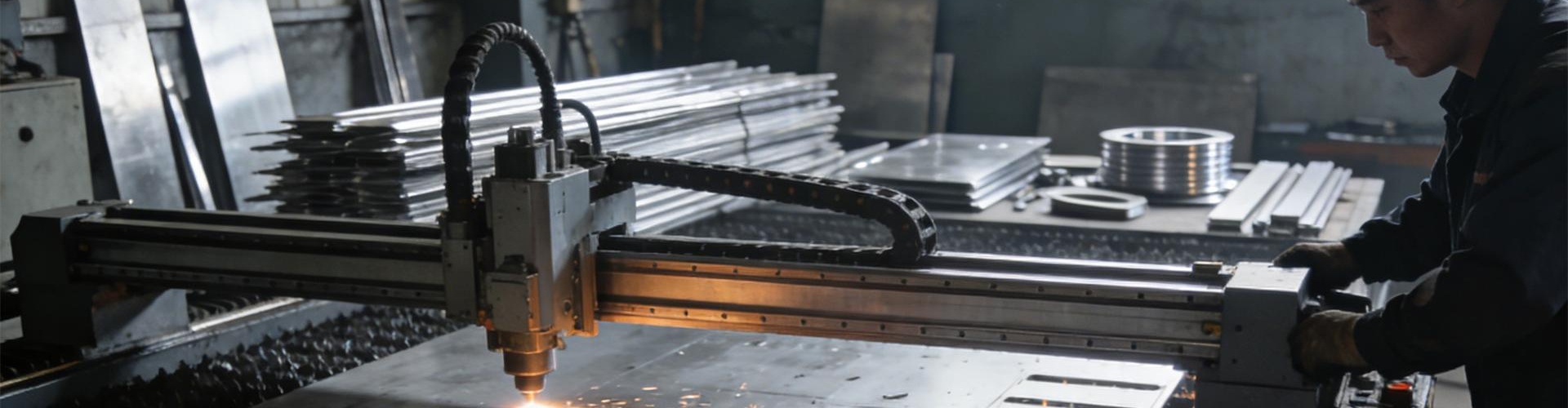
Super duplex S32750, usually called 2507, is a nominally 25Cr-7Ni-4Mo-N stainless steel. Its seamless pipe is made by hot extrusion, high-temperature solution annealing near 1050 to 1100 degrees Celsius, rapid water quenching, and cold pilgering or drawing. That route develops a balanced roughly 50/50 austenite-ferrite microstructure with a pitting resistance equivalent number above 40 and a minimum yield strength around 550 MPa, or about 80 ksi; cold-worked tube reaches tensile strength near 125 ksi. Strength paired with corrosion resistance is why 2507 gets specified for the most aggressive chloride-bearing services.
The Metallurgy Behind the Numbers
Super duplex gets its performance from a deliberate two-phase structure. Ferrite provides high strength and resistance to chloride stress corrosion cracking; austenite contributes toughness and general corrosion resistance. The nominal chemistry, about 25 percent chromium, 7 percent nickel, 4 percent molybdenum, and 0.24 to 0.32 percent nitrogen, is set so both phases come out roughly equal after solution annealing. Nitrogen is the key modern lever: it's a strong austenite former, it raises strength through solid-solution hardening, and it sharply increases pitting resistance. Run the numbers through PREN = %Cr + 3.3 x %Mo + 16 x %N and a typical 2507 heat reaches a PREN of about 43, comfortably above the 40 threshold that defines the super duplex class.
The price of that performance is metallurgical sensitivity. Between roughly 600 and 950 degrees Celsius, brittle intermetallic phases such as sigma and chi can precipitate within minutes, robbing chromium and molybdenum from the matrix and wrecking both toughness and corrosion resistance. Every manufacturing step is built to move the material through this window quickly and leave it fully solution-treated. The same sensitivity constrains fabrication downstream: welding heat input, interpass temperature, and any post-forming heat treatment all have to respect the same thermal limits, because a perfect mill product can still be ruined by careless field practice.
Hot Extrusion of the Hollow
Seamless super duplex pipe starts as a solid or bored billet, induction-heated to extrusion temperature, glass-lubricated, and pushed through a die over a mandrel to form a hollow mother tube. Extrusion suits high-alloy grades because it works the material under compressive stress, which suppresses cracking in a metal far less forgiving than 304 or 316. The high extrusion temperature keeps deformation loads manageable, but the tube can't be allowed to dwell in the intermetallic range on cooling, so it goes straight toward solution treatment.
Solution Annealing and Water Quench
Solution annealing is the decisive heat treatment. Holding the pipe at about 1050 to 1100 degrees Celsius dissolves any sigma or chi phase, homogenizes chromium and molybdenum, and restores the balanced austenite-ferrite ratio. The hold has to be followed by an aggressive water quench: cooling fast enough to freeze the microstructure and stop reprecipitation as the pipe passes back through 950 to 600 degrees Celsius. Too slow a quench is one of the most frequent causes of failed impact or corrosion tests in duplex product, which is why quench-water volume and part handling are controlled and why finished pipe is verified by impact testing and corrosion testing per ASTM A790 and A923.
Cold Pilgering, Drawing, and Strengthening
To hit final dimensions and tolerances, the solution-annealed mother tube is cold worked by pilger rolling or by drawing over a plug. Cold pilgering reduces both diameter and wall in one controlled operation and improves surface finish and dimensional accuracy. It also raises strength through work hardening, letting tube exceed 125 ksi tensile in the as-worked condition. Because cold work stores energy and cuts ductility, an intermediate solution anneal and quench goes in between heavy passes, and a final solution anneal restores the specified microstructure unless the customer specifically asks for a cold-worked, higher-strength delivery condition. Reduction per pass has to be tightly controlled: too much cold work in a single stroke can start surface tearing or internal cracking in a grade already low in ductility next to standard austenitics, so process parameters are validated against each heat.
Table: Indicative Process and Property Targets
| Stage | Typical Condition | Purpose |
| Hot extrusion | ~1150-1250 C, glass lubricant | Form seamless hollow under compression |
| Solution anneal | 1050-1100 C hold | Dissolve intermetallics, balance phases |
| Water quench | Rapid, high-volume | Prevent sigma/chi reprecipitation |
| Cold pilger/draw | Ambient, multi-pass | Final size, tolerance, work hardening |
| Final property | YS = 550 MPa, PREN ~43 | Strength plus chloride resistance |
Domestic Progress and Where 2507 Delivers Value
For years the highest-strength super duplex tubulars belonged to a handful of overseas producers, but Chinese mills have made real metallurgical gains in melting cleanliness, nitrogen control, and controlled cold working, and now produce high-strength super duplex seamless pipe that meets demanding offshore and chemical specifications. That maturation improves supply security and shortens lead times for buyers who used to import every meter.
The applications justify the effort. Offshore oil and gas uses 2507 for topside piping, umbilicals, and seawater systems where warm, oxygenated chlorides would quickly pit or crack lesser grades. Seawater desalination relies on it for high-pressure reverse-osmosis piping and heat-rejection sections. Chemical and pigment plants use it for acidic, chloride-laden process streams. The value proposition is the same in each case: super duplex allows thinner walls at higher pressure because of its strength, while its PREN above 40 gives the corrosion margin that keeps the asset in service. A thinner wall also means less alloy per meter, which partly offsets the higher price per kilogram of a super duplex heat, and it cuts weight on offshore structures where every tonne of topside mass carries a premium. Verified through PMI, chemistry, mechanical, ferrite, and corrosion testing, 2507 pipe is a demanding product that rewards disciplined manufacturing at every stage.
Frequently Asked Questions
Q: Why is the solution-anneal temperature so high for 2507?
A: Around 1050 to 1100 degrees Celsius is needed to fully dissolve brittle sigma and chi phases and rebalance the austenite-ferrite structure; a rapid quench then locks that structure in.
Q: Can super duplex be supplied in a higher-strength cold-worked condition?
A: Yes. Cold pilgering or drawing can push tensile strength toward 125 ksi, but this must be specified because most standard deliveries are final solution-annealed for maximum toughness and corrosion resistance.
Need super duplex 2507/S32750 seamless pipe with full mechanical and corrosion documentation? Contact Zhejiang Wenqiang Stainless Steel Co., Ltd. Tel +86 577 8922 2595 / https://www.chinawqsteel.com/

Copyright © 2026 Strongwin Stainless Steel Group Co., Ltd. All rights reserved. - Privacy Policy
 EN
EN
 Hot News