Stainless Steel vs 304: Complete Guide to Benefits, Applications, and Performance Advantages

All Categories

Get a Free Quote

Our representative will contact you soon.
Email
Mobile/WhatsApp
Name
Company Name
Message
0/1000

stainless steel vs 304

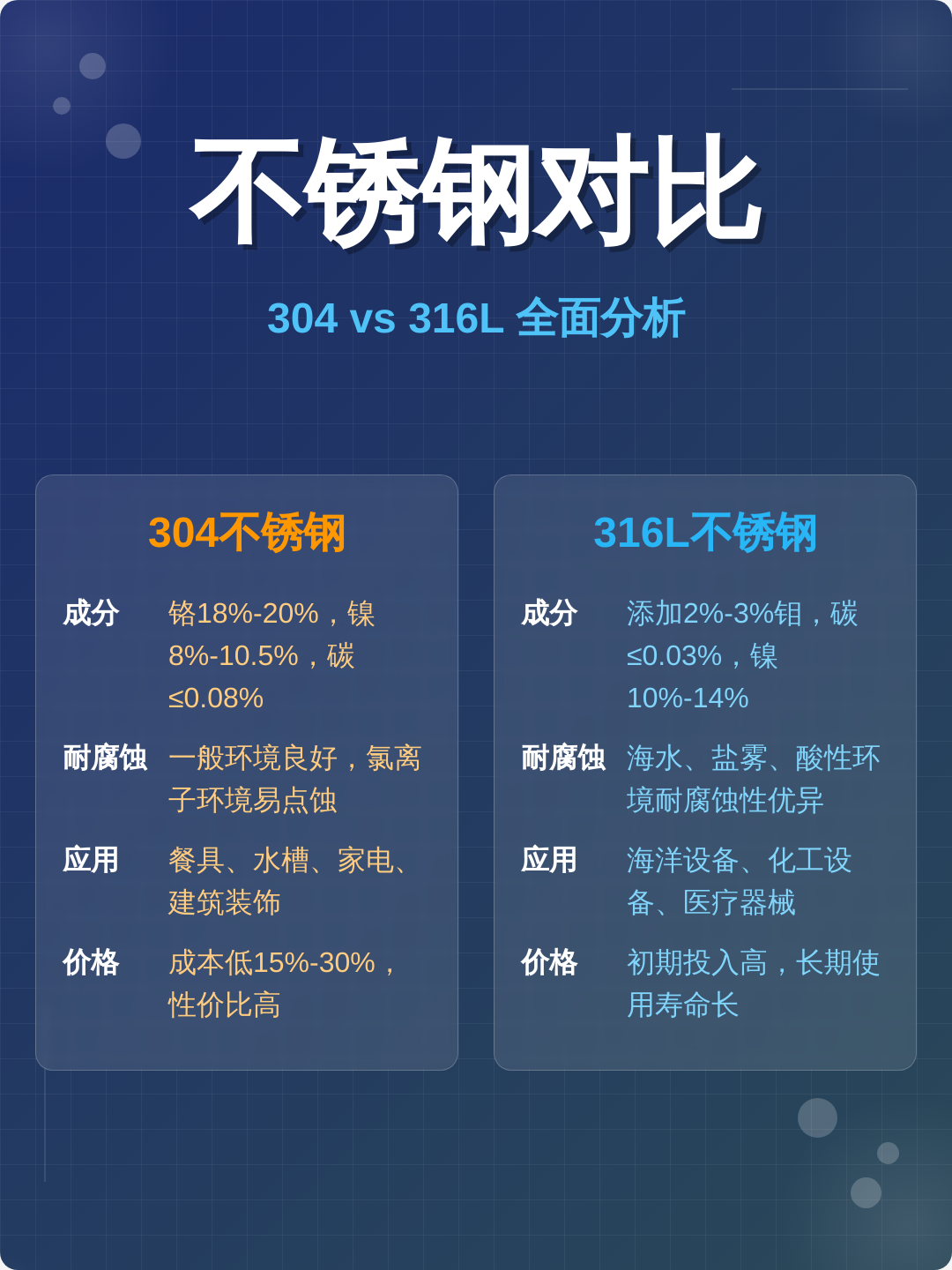
Understanding stainless steel vs 304 requires examining the broader category of stainless steel alloys and how 304 grade fits within this family. Stainless steel represents a diverse group of iron-based alloys containing at least 10.5% chromium, which forms a protective oxide layer preventing corrosion. The comparison of stainless steel vs 304 specifically focuses on how this particular grade measures against other stainless steel variants. Grade 304 stainless steel belongs to the austenitic family, containing approximately 18% chromium and 8% nickel, making it one of the most widely used stainless steel grades globally. The technological features of 304 stainless steel include excellent formability, weldability, and moderate corrosion resistance in most environments. When evaluating stainless steel vs 304, the grade demonstrates superior performance in food processing, architectural applications, and general industrial use compared to lower grades. The main functions of 304 stainless steel encompass structural support, corrosion protection, and aesthetic enhancement across numerous industries. Its non-magnetic properties in annealed condition and ability to maintain strength at elevated temperatures make it invaluable for heat exchangers and cooking equipment. Applications span from kitchen appliances and cutlery to chemical processing equipment and automotive trim. The stainless steel vs 304 comparison reveals that while other grades like 316 offer superior corrosion resistance in marine environments, 304 provides optimal cost-effectiveness for general applications. Manufacturing processes for 304 stainless steel include hot rolling, cold forming, and various surface finishes ranging from mill finish to mirror polish. The material's recyclability and longevity contribute to sustainable manufacturing practices, making stainless steel vs 304 an environmentally conscious choice for modern applications.

New Product Recommendations

The advantages of stainless steel vs 304 become evident when examining cost-effectiveness and performance characteristics that benefit end users. Grade 304 offers exceptional value because it delivers reliable corrosion resistance at a lower cost than premium grades like 316 or 317. This economic advantage makes stainless steel vs 304 an attractive option for businesses seeking quality materials without excessive expenditure. The material provides excellent durability, often lasting decades without replacement, which reduces long-term maintenance costs and downtime. Manufacturing flexibility represents another key advantage, as 304 stainless steel can be easily formed, welded, and machined using standard equipment and techniques. This workability translates to lower fabrication costs and faster project completion times for customers. Hygiene benefits make stainless steel vs 304 particularly valuable in food service and medical applications, where the non-porous surface resists bacterial growth and allows thorough cleaning. The material maintains its appearance over time, requiring minimal maintenance while providing an attractive finish that enhances product aesthetics. Temperature resistance allows 304 stainless steel to perform reliably in both high-heat cooking applications and low-temperature storage environments. Unlike carbon steel, stainless steel vs 304 does not require protective coatings or regular painting, eliminating ongoing maintenance expenses. The material's strength-to-weight ratio provides structural efficiency, allowing designers to use less material while maintaining performance standards. Recycling advantages ensure that stainless steel vs 304 retains value at the end of its service life, contributing to circular economy principles. The grade's widespread availability ensures consistent supply chains and competitive pricing for purchasers. Chemical compatibility makes 304 stainless steel suitable for contact with most foods, beverages, and common cleaning agents without degradation. These practical benefits demonstrate why stainless steel vs 304 remains the preferred choice for diverse applications ranging from residential kitchen equipment to commercial food processing facilities.

Practical Tips

Strongwin Stainless Steel Group Achieves ISO 90012015 Certification and AD 2000 Merkblatt Approval

28

Feb

Strongwin Stainless Steel Group Achieves ISO 90012015 Certification and AD 2000 Merkblatt Approval

View More
Strongwin Stainless Steel Group Announces Major Production Capacity Expansion to Meet Growing Global Demand

11

Mar

Strongwin Stainless Steel Group Announces Major Production Capacity Expansion to Meet Growing Global Demand

View More
Strongwin Stainless Steel Group Announces Strategic Partnership with Leading European Engineering Firm

11

Mar

Strongwin Stainless Steel Group Announces Strategic Partnership with Leading European Engineering Firm

View More

Get a Free Quote

Our representative will contact you soon.
Email
Mobile/WhatsApp
Name
Company Name
Message
0/1000

stainless steel vs 304

Superior Corrosion Resistance for Long-Term Performance

Superior Corrosion Resistance for Long-Term Performance

The corrosion resistance of stainless steel vs 304 stands as its most significant advantage, providing exceptional protection against rust, staining, and environmental degradation. This resistance stems from the chromium content that forms a passive oxide layer on the surface, continuously regenerating when damaged. Unlike regular steel that requires protective coatings, 304 stainless steel maintains its integrity in most atmospheric conditions, humid environments, and contact with many chemicals. The practical value for customers includes reduced replacement costs, as equipment and structures made from 304 grade can last 25-50 years with minimal maintenance. Food processing facilities particularly benefit from this corrosion resistance, as the material withstands daily cleaning with sanitizing agents and acidic food products without degradation. Architectural applications showcase the long-term value of stainless steel vs 304, where building facades and decorative elements maintain their appearance for decades without the need for repainting or refinishing. Marine applications, while not ideal for saltwater immersion, demonstrate adequate performance in coastal environments where salt spray and humidity challenge other materials. The economic impact extends beyond initial cost savings, as businesses avoid production downtime associated with equipment failure and replacement. Maintenance schedules become less frequent and less intensive, allowing companies to allocate resources to core operations rather than material upkeep. The self-healing nature of the passive layer means that minor scratches and surface damage do not compromise the overall corrosion protection, maintaining performance even under challenging conditions. This reliability gives customers confidence in their investment, knowing that stainless steel vs 304 will perform consistently throughout its service life without unexpected failures or costly emergency repairs.
Excellent Formability and Manufacturing Versatility

Excellent Formability and Manufacturing Versatility

The formability characteristics of stainless steel vs 304 provide manufacturers and fabricators with exceptional design flexibility and processing efficiency. This grade exhibits superior ductility and malleability compared to higher-strength stainless steel variants, allowing complex shapes and tight radius bends without cracking or work hardening. Deep drawing operations, commonly used in kitchen sink and cookware production, benefit from 304's ability to stretch and form without tearing or creating stress concentrations. The material's response to various forming techniques including spinning, stamping, and roll forming enables cost-effective mass production of consumer goods and industrial components. Welding characteristics represent another crucial advantage, as stainless steel vs 304 joins easily using standard techniques without requiring special filler materials or post-weld heat treatment. This weldability reduces fabrication time and costs while ensuring strong, corrosion-resistant joints that match the base material properties. Machining operations proceed smoothly with proper tooling and techniques, although the material's work-hardening tendency requires careful consideration of cutting speeds and feed rates. The ability to achieve various surface finishes from standard mill finish to highly polished mirrors provides aesthetic versatility for architectural and decorative applications. Cold forming capabilities allow manufacturers to produce complex parts without expensive heating operations, reducing energy costs and production time. Sheet metal fabrication benefits significantly from 304's formability, enabling the production of intricate ventilation systems, enclosures, and decorative panels. The material's consistent properties ensure predictable forming behavior, reducing scrap rates and improving manufacturing efficiency. Quality control becomes more manageable when working with stainless steel vs 304, as the material's stable composition and predictable response to processing reduce variability in final products. This manufacturing versatility translates directly to cost savings for customers, as efficient production techniques keep pricing competitive while maintaining high quality standards.
Food Safety Compliance and Hygienic Properties

Food Safety Compliance and Hygienic Properties

The food safety characteristics of stainless steel vs 304 make it the preferred material for commercial kitchens, food processing equipment, and consumer appliances where hygiene is paramount. Regulatory agencies including the FDA and NSF recognize 304 stainless steel as safe for direct food contact, eliminating concerns about chemical migration or contamination. The non-porous surface structure prevents bacterial adhesion and growth, creating an inherently hygienic environment that supports food safety protocols. Unlike plastic or coated materials that can harbor microorganisms in surface scratches, stainless steel vs 304 maintains its smooth surface integrity even after years of use and cleaning. Cleaning effectiveness reaches optimal levels with 304 stainless steel, as the material withstands aggressive sanitizing chemicals and high-temperature wash cycles without degradation. Steam sterilization procedures, commonly used in food processing facilities, are fully compatible with 304 grade stainless steel, ensuring complete pathogen elimination. The material's resistance to organic acids naturally present in foods like tomatoes, citrus fruits, and vinegar prevents corrosion that could create rough surfaces or metallic flavors. Commercial dishwashing operations benefit from 304's durability, as the material resists pitting and staining from detergents and rinse aids used in high-volume cleaning systems. Temperature cycling between refrigeration and cooking temperatures does not affect the material's properties, maintaining food safety standards across diverse applications. Dairy processing equipment particularly benefits from stainless steel vs 304, as milk proteins and cleaning chemicals do not cause surface degradation that could harbor harmful bacteria. The material's neutral taste and odor characteristics ensure that food flavors remain unaltered during processing, storage, or serving. Traceability and quality assurance programs rely on the consistent properties of 304 stainless steel, as certified material provides documented composition and performance characteristics. Long-term cost benefits emerge from reduced food safety incidents, lower insurance premiums, and decreased regulatory compliance costs associated with inferior materials that may compromise food safety standards.

Get a Free Quote

Our representative will contact you soon.
Email
Mobile/WhatsApp
Name
Company Name
Message
0/1000