Country-of-origin (COO) compliance means declaring, correctly and honestly, where stainless steel pipe was actually made, and being able to prove it with documentation that holds up under customs scrutiny. With antidumping duties, countervailing duties, tariffs, and other trade remedies multiplying, origin is no longer a formality; it decides which duties apply and whether a shipment clears or gets seized. The governing legal test is substantial transformation: goods originate where the last substantial manufacturing process gave them their essential character. Running product through a third country to hide its true origin, called transshipment, is illegal and carries severe penalties. Compliant sourcing rests on real manufacturing, complete mill test certificates and certificates of origin, and a transparent supply chain. This overview is factual guidance, not legal advice.
Substantial Transformation Explained
Customs authorities set origin by the principle of substantial transformation. A product originates where it went through the last process that changed its name, character, or use into a new and different article of commerce. Minor operations, repackaging, labeling, light finishing, simple assembly, generally don't confer origin, because they don't create a fundamentally new product.
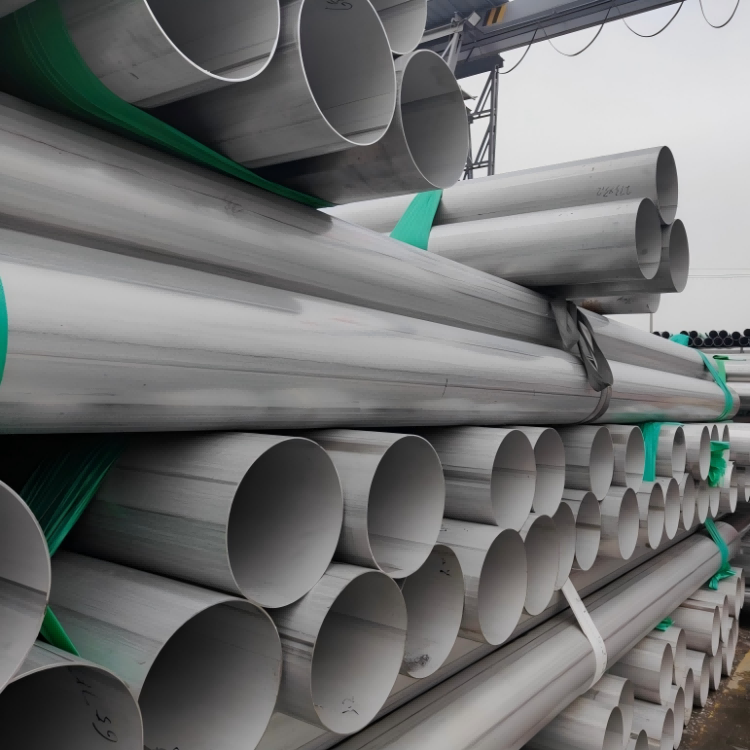
For stainless steel pipe, that transformation is the pipe-making itself: melting and forming the steel, then piercing seamless pipe or forming and welding welded pipe from raw material into finished tube. The country where that happens is the country of origin. Cutting, polishing, or re-marking finished pipe in another country does not change where the pipe was truly made.
Why Transshipment Is Illegal
Transshipment to evade duties, routing goods through an intermediary country and falsely declaring that country as the origin, is customs fraud. It's a different thing entirely from legitimate logistical transshipment, where goods pass through a port with no claim that their origin changed.
The penalties bite: seizure of goods, heavy monetary penalties, retroactive duty assessments, loss of import privileges, and in the worst cases criminal liability. Since the importer of record carries responsibility, a buyer who unknowingly takes falsely originated goods can still wear the consequences. That's why confirming a supplier actually manufactures what it sells, rather than re-exporting another country's product, is a core due-diligence step.
The Documentation That Proves Origin
Credible origin rests on a paper trail. The table lists the key documents and what each one establishes.
| Document | What It Proves | Issued By |
| Certificate of Origin | Country where goods were made | Exporter / chamber of commerce |
| Mill Test Certificate (EN 10204 3.1) | Heat chemistry and mechanical properties | Manufacturer's lab |
| Commercial Invoice / Packing List | Transaction, description, quantity | Exporter |
| Production / Heat Records | Manufacturing at the stated facility | Manufacturer |
A mill test certificate (MTC) to EN 10204 3.1 ties a specific heat of steel to its chemistry and mechanical results, and paired with production records it helps show the pipe was genuinely made at the stated mill. The certificate of origin then formally declares the origin country. With the commercial invoice and packing list alongside them, these documents make up the package customs relies on.
What Customs Scrutinizes
Customs officers look for consistency across the whole document set. The origin on the certificate of origin should match the manufacturer named on the mill test certificate, the production records, and the shipping documents. A mismatch, say a certificate of origin naming one country while the MTC names a mill in another, is an immediate red flag.
Officials may also test whether the named facility can actually make what's claimed, ask for more evidence during an inquiry, and cross-check tariff classifications. With trade remedies active on many fronts, scrutiny has stepped up, and shipments with thin or inconsistent paperwork are the ones most likely to be held, questioned, or penalized. Correct tariff classification matters here too, since it drives which trade-remedy orders might apply to the product.
Sourcing Compliantly
Compliant sourcing starts by picking a genuine manufacturer over a trader who muddies origin. Confirm the supplier owns real production capability, ask to see the plant and its quality certifications, and require documentation that stays internally consistent from heat number through certificate of origin. Insist on EN 10204 3.1 or 3.2 mill test certificates, an ISO 9001 quality system, and clear traceability from raw material to finished pipe.
Write compliance into the contract: the documents required, the origin representations, and the right to audit or request scope rulings where coverage is uncertain. Work with a qualified customs broker to classify products correctly and to confirm which trade remedies, if any, apply to your goods and their true origin. Diversifying suppliers cuts concentration risk, but only when each alternative origin is real and fully documented.
A short verification checklist keeps this repeatable. Check that the mill's stated capacity and equipment match the volume and product you're buying; a facility that can't physically make the tonnage it invoices is a warning sign. Trace at least one heat number end to end, from raw-material record through mill test certificate to certificate of origin, and confirm the manufacturer's name and address read the same on every document. Where the stakes are high, an on-site or third-party audit of the plant is the strongest assurance that goods are genuinely transformed there rather than just handled. Keep that evidence on file, so if customs asks a question months later you answer with documents instead of assurances.
Building a Defensible Supply Chain
The aim is a supply chain whose origin claims are both true and provable. Wenqiang manufactures seamless and welded stainless steel pipe, fittings, and flanges in Wenzhou, China, to standards such as ASTM A312, A213, A269, A249, A790, and A928, backed by an in-house metallurgical lab that runs PMI, chemical, mechanical, hydrostatic, and non-destructive testing, along with ISO 9001 certification and EN 10204 3.1/3.2 mill test certificates. Real manufacturing paired with consistent documentation gives importers the traceable, defensible origin record customs compliance now demands. For decisions specific to your entries, consult qualified customs counsel.
Frequently Asked Questions
Q1: What determines the country of origin of stainless steel pipe?
A: The principle of substantial transformation: origin is the country where the last process that gave the pipe its essential character, such as melting, forming, and welding or piercing, took place.
Q2: Is transshipment to change declared origin legal?
A: No. Routing goods through a third country to falsely declare origin and evade duties is customs fraud, punishable by seizure, penalties, retroactive duties, and loss of import privileges.
Q3: What documents prove origin to customs?
A: A consistent set including the certificate of origin, EN 10204 3.1 mill test certificate, production/heat records, and commercial invoice, all naming the same manufacturer and country.
Build a compliant, fully documented stainless steel pipe supply chain with Wenqiang: call +86 577 8922 2595 or visit https://www.chinawqsteel.com/
Copyright © 2026 Strongwin Stainless Steel Group Co., Ltd. All rights reserved. - Privacy Policy
 EN
EN
 Hot News