Wet flue gas desulfurization (FGD) scrubbers are among the most corrosive places in a power plant, and material selection there is driven by chlorides, low pH, condensing acids, and abrasion rather than temperature alone. The right stainless steel depends on the zone: 316L may serve mild locations, but the absorber, the wet-dry interfaces, and the chloride-concentrating regions often demand 317L, duplex 2205, or 6% molybdenum superaustenitic and super duplex grades. Pick too lean an alloy and it pits and crevice-corrodes fast; match the grade correctly and it runs for decades. At Zhejiang Wenqiang Stainless Steel Co., Ltd. we help operators map the environment to the alloy zone by zone.
The wet FGD environment
In a wet limestone scrubber, hot flue gas meets a slurry that absorbs sulfur dioxide, and the result is a chemically hostile mix. Chlorides, carried in from coal and concentrated by evaporation and recirculation, are the main driver of pitting and crevice corrosion, and they can reach thousands or tens of thousands of parts per million in recirculating liquor. The pH runs low, often 4 to 6 in the bulk slurry and far lower in local condensate, and residual sulfur species plus dissolved oxygen add oxidizing acidity.
Physical attack piles onto the chemistry. Limestone and gypsum solids abrade surfaces, and slurry moving through spray headers, nozzles, and recycle piping erodes protective films. The worst spots are wet-dry interfaces such as the inlet, where hot gas first meets liquid and evaporation concentrates chlorides and acids into aggressive films that can pit even well-alloyed material. Temperature swings from hot at the inlet to near ambient in outlet ducting, so the corrosion regime shifts along the flow path.
Why standard grades struggle
You gauge an austenitic or duplex steel's resistance to chloride pitting with the pitting resistance equivalent number, PREN, calculated roughly as chromium plus 3.3 times molybdenum plus 16 times nitrogen. A higher PREN means the steel tolerates a higher chloride level and lower pH before pitting sets in.
| Grade | Approximate PREN | Typical FGD role |
| 316L | 24-26 | Mild zones, low-chloride outlet regions |
| 317L | 29-31 | Moderate chloride slurry piping and internals |
| Duplex 2205 | 34-38 | Absorber internals, slurry lines with higher chloride |
| 6Mo / superaustenitic | 43-45 | Aggressive absorber, wet-dry interface, high-chloride liquor |
| Super duplex 2507 | 42-45 | High-chloride, high-strength, erosive slurry service |
316L, with a PREN near 25, handles only modest chloride levels and pits quickly in concentrated FGD liquor, so it stays in the mildest zones. 317L, with added molybdenum, stretches the range a bit. Duplex 2205 brings both higher PREN and roughly double the yield strength of 316L, so you can use thinner, stronger sections in slurry piping and absorber internals. Where chlorides climb into the tens of thousands of ppm and pH drops, only 6Mo superaustenitic or super duplex 2507 hold up reliably against pitting and crevice attack.
Material zones through the system
An FGD system is best read as a series of environments. The inlet and quench zone, a wet-dry interface with hot gas, condensing acid, and concentrating chlorides, is the toughest, and typically calls for 6Mo superaustenitic or lined construction. The absorber vessel and its internals, spray headers, and recycle piping see concentrated, abrasive, chloride-rich slurry at moderate temperature, where duplex 2205 or superaustenitic grades are common. Slurry recycle and bleed piping, exposed to erosion-corrosion, benefit from duplex strength and PREN. The outlet duct and mist eliminator region, cooler and often lower in chloride but wet and acidic, may use 317L or duplex depending on local conditions. Reheated or dry downstream ducting is milder and takes leaner grades.
Since each zone differs, one alloy rarely suits the whole system. Over-specify everywhere and you waste money; under-specify at the inlet or absorber and you invite failure. Mapping chloride concentration, pH, temperature, and abrasion for each location is the disciplined way to choose.
Crevices, welds, and fabrication
Even the right alloy fails early if crevices and welds get neglected. Gaskets, bolted laps, deposits, and incomplete-penetration welds create crevices where chlorides concentrate and pitting kicks off below the level the bulk metal would otherwise take. Design to minimize crevices, favor full-penetration welds, and allow drainage so solids do not build up.
Welding has to protect corrosion resistance. For duplex grades, controlled heat input and the correct filler keep the ferrite-austenite balance and avoid embrittling phases; for superaustenitics, over-alloyed nickel-based fillers make up for molybdenum segregation in the weld. Heat tint has to be removed and surfaces repassivated, because chromium-depleted weld zones are exactly where FGD liquor goes after first. Positive material identification on incoming pipe and fittings heads off the costly mistake of a lean grade landing in a high-chloride zone.
Why upgrades are often needed
Plenty of FGD systems were originally built with linings or leaner stainless, then upgraded as fuel chlorides rose, load cycling drove more condensation, or lining failures exposed the substrate. Higher-chloride coals, water recycling that concentrates salts, and tighter emissions limits that add wet stages all push the environment toward higher-PREN alloys. Upgrading to duplex or superaustenitic grades trims wall thickness through higher strength, cuts maintenance outages, and extends life, which often justifies the higher alloy cost over the plant's remaining operating years.
Practical guidance
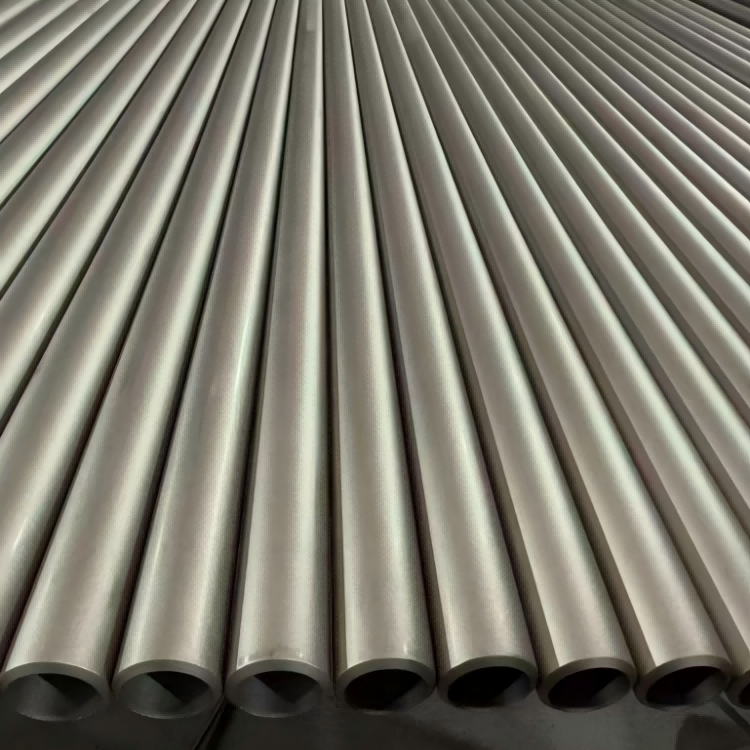
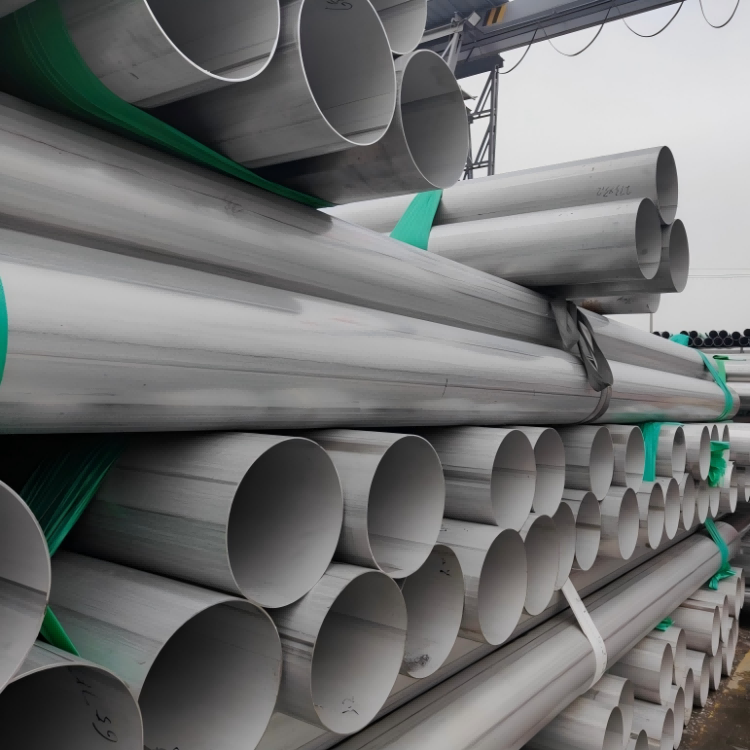
Select FGD materials zone by zone against chloride level, pH, temperature, and abrasion, using PREN as a screening guide: 316L only for mild regions, 317L and duplex 2205 for moderate to high chloride, and 6Mo superaustenitic or super duplex 2507 for the inlet, absorber, and concentrated liquor. Minimize crevices, use the correct fillers, and remove heat tint. Wenqiang supplies 316L, 317L, duplex 2205, and super duplex 2507/S32750 pipe, tube, and fittings with PMI, chemical, mechanical, and corrosion testing, so operators can match each scrubber zone to a verified, correctly certified alloy.
Frequently Asked Questions
Q: Why is 316L often inadequate for FGD scrubbers?
A: 316L has a PREN near 25 and resists only modest chloride levels. FGD liquor concentrates chlorides into the thousands or tens of thousands of ppm at low pH, so 316L pits and crevice-corrodes quickly except in the mildest zones.
Q: How do you choose stainless steel for different FGD zones?
A: Map chloride concentration, pH, temperature, and abrasion for each location, then match PREN: 316L for mild zones, 317L and duplex 2205 for moderate to high chloride, and 6Mo superaustenitic or super duplex 2507 for the aggressive inlet, absorber, and concentrated liquor.
For FGD-grade stainless pipe, tube, and fittings in 316L, 317L, 2205, and 2507 with full PMI and corrosion testing, contact Zhejiang Wenqiang Stainless Steel Co., Ltd. at +86 577 8922 2595 / https://www.chinawqsteel.com/

Copyright © 2026 Strongwin Stainless Steel Group Co., Ltd. All rights reserved. - Privacy Policy
 EN
EN
 Hot News