304 vs 316 Steel: Complete Comparison Guide for Material Selection

All Categories

Get a Free Quote

Our representative will contact you soon.
Email
Mobile/WhatsApp
Name
Company Name
Message
0/1000

304 vs 316 steel

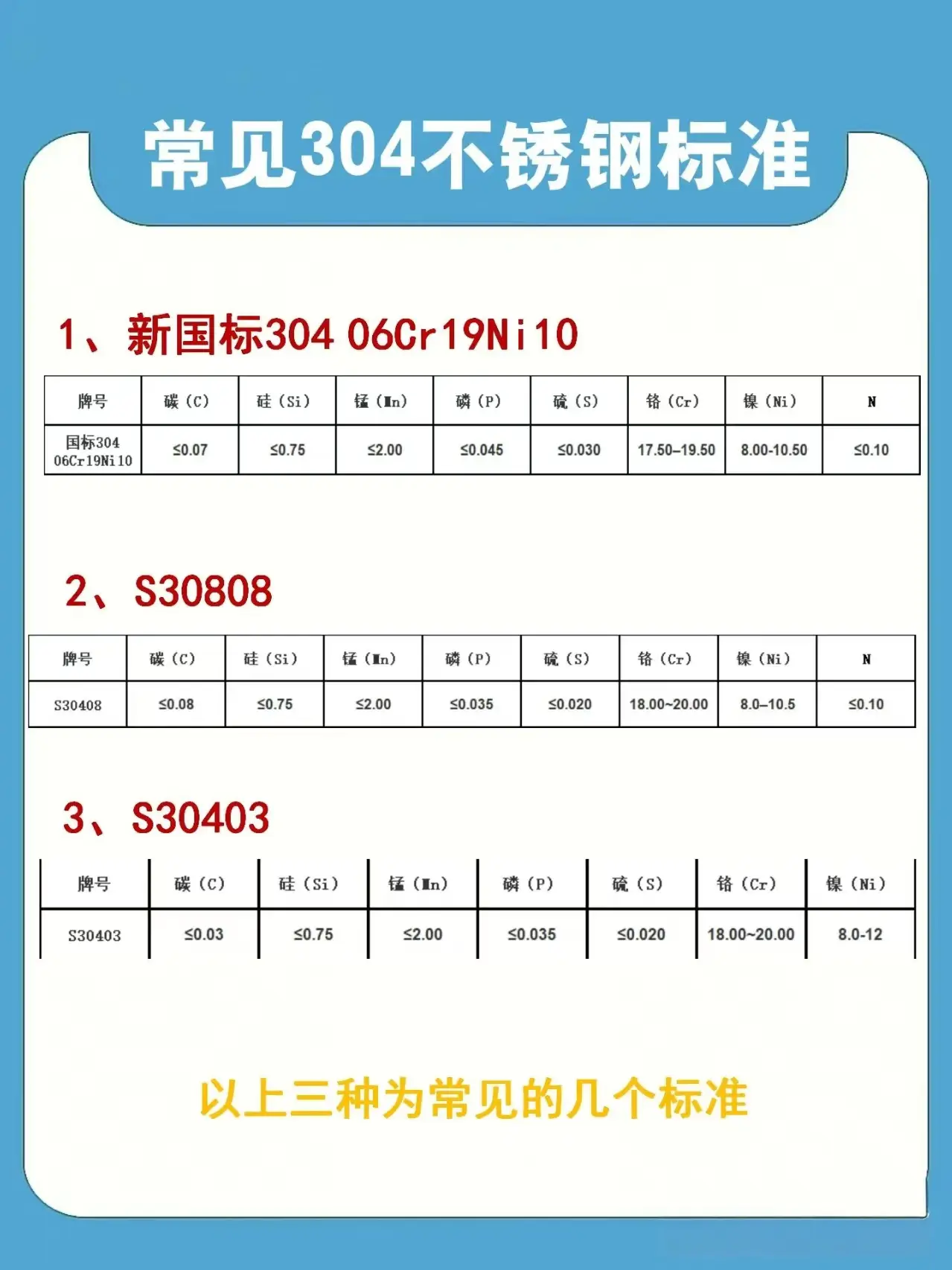
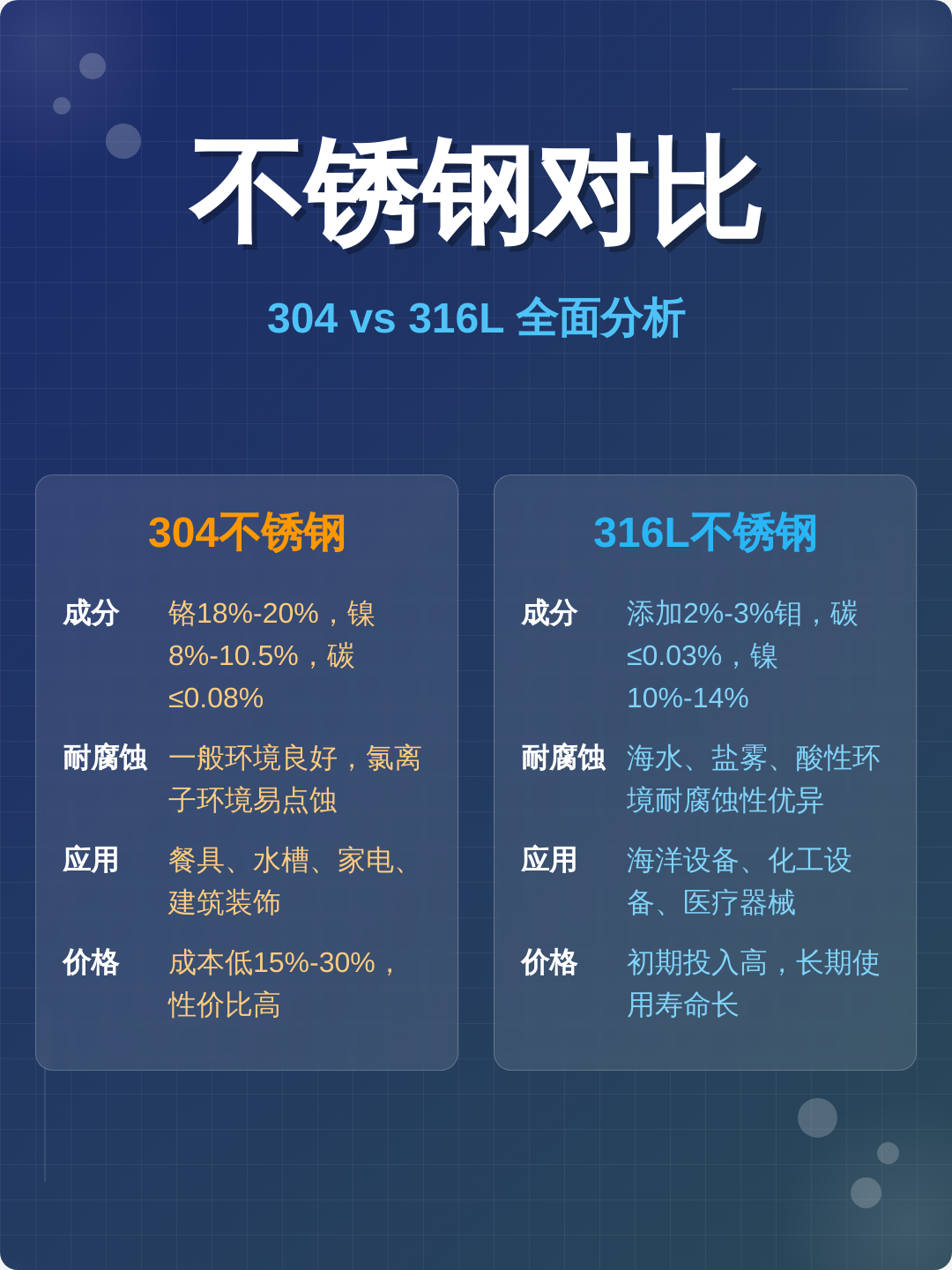
Understanding the differences between 304 vs 316 steel represents a crucial decision for engineers, manufacturers, and procurement professionals across diverse industries. These two austenitic stainless steel grades constitute the most widely specified materials in modern manufacturing, yet their distinct properties make them suitable for dramatically different applications. The 304 vs 316 steel comparison reveals fundamental differences in chemical composition, corrosion resistance, mechanical properties, and cost considerations that directly impact project outcomes and long-term performance. Both grades belong to the austenitic family of stainless steels, characterized by their excellent formability, weldability, and overall durability. However, the primary distinction lies in their molybdenum content, which significantly affects their resistance to specific types of corrosion. Grade 304 contains approximately 18-20% chromium and 8-10.5% nickel, making it suitable for general-purpose applications where moderate corrosion resistance suffices. In contrast, 316 grade incorporates 2-3% molybdenum alongside similar chromium and nickel levels, dramatically enhancing its resistance to chloride-induced pitting and crevice corrosion. The technological features of 304 vs 316 steel extend beyond simple chemical composition differences. Grade 304 offers excellent mechanical properties with a tensile strength ranging from 515-620 MPa and yield strength of 205-310 MPa, making it ideal for structural applications, kitchen equipment, automotive components, and architectural elements. Meanwhile, 316 grade provides superior performance in harsh environments, including marine applications, chemical processing equipment, pharmaceutical manufacturing, and medical devices. The applications for 304 vs 316 steel span virtually every industrial sector, from food processing and construction to aerospace and biotechnology. Understanding these materials enables informed decision-making that balances performance requirements with budget constraints while ensuring optimal long-term reliability.

New Products

The advantages of choosing between 304 vs 316 steel depend entirely on your specific application requirements and environmental conditions. Grade 304 offers exceptional value for general-purpose applications where cost-effectiveness remains paramount. This grade provides excellent corrosion resistance in normal atmospheric conditions, making it perfect for indoor applications, food service equipment, kitchen appliances, and architectural features. The lower molybdenum content in 304 grade translates directly into reduced material costs, typically 10-15% less expensive than 316 grade, while still delivering outstanding performance for most standard applications. Manufacturing processes benefit from 304 grade's superior machinability and formability, allowing for easier fabrication, welding, and finishing operations that reduce production time and labor costs. Grade 316 steel delivers unmatched performance advantages in challenging environments where standard stainless steel grades fail. The molybdenum addition creates exceptional resistance to chloride corrosion, making 316 grade indispensable for marine environments, coastal installations, and applications involving salt water exposure. Chemical processing industries rely heavily on 316 grade because it withstands aggressive chemicals, acids, and high-temperature conditions that would quickly degrade lesser materials. Medical and pharmaceutical applications demand the superior purity and biocompatibility that 316 grade provides, ensuring patient safety and regulatory compliance. The 304 vs 316 steel comparison reveals that while 316 costs more initially, its extended service life in harsh conditions often provides better total cost of ownership. Grade 316 maintains structural integrity under extreme temperature fluctuations, from cryogenic applications to high-heat industrial processes. Both grades offer excellent hygiene properties, making them ideal for food processing and pharmaceutical manufacturing where cleanliness requirements are critical. The non-magnetic properties of both austenitic grades make them suitable for electronic applications and precision instruments. Welding characteristics remain excellent for both grades, though 316 requires slightly more careful heat management due to its molybdenum content. Maintenance requirements remain minimal for both grades, with simple cleaning procedures maintaining their appearance and performance over decades of service.

Tips And Tricks

Strongwin Stainless Steel Group Achieves ISO 90012015 Certification and AD 2000 Merkblatt Approval

28

Feb

Strongwin Stainless Steel Group Achieves ISO 90012015 Certification and AD 2000 Merkblatt Approval

View More
Strongwin Stainless Steel Group Announces Major Production Capacity Expansion to Meet Growing Global Demand

11

Mar

Strongwin Stainless Steel Group Announces Major Production Capacity Expansion to Meet Growing Global Demand

View More
Strongwin Stainless Steel Group Announces Strategic Partnership with Leading European Engineering Firm

11

Mar

Strongwin Stainless Steel Group Announces Strategic Partnership with Leading European Engineering Firm

View More

Get a Free Quote

Our representative will contact you soon.
Email
Mobile/WhatsApp
Name
Company Name
Message
0/1000

304 vs 316 steel

Superior Corrosion Resistance Performance

Superior Corrosion Resistance Performance

The most significant differentiating factor in the 304 vs 316 steel comparison lies in their dramatically different corrosion resistance capabilities, which directly impacts their suitability for specific applications and environments. Grade 304 provides excellent corrosion resistance in normal atmospheric conditions, indoor environments, and mildly corrosive settings, making it the preferred choice for architectural applications, food service equipment, and general manufacturing where cost considerations balance performance requirements. However, its limitations become apparent in chloride-rich environments, where pitting and crevice corrosion can compromise structural integrity over time. The chromium-nickel composition of 304 grade forms a protective oxide layer that effectively resists general corrosion but lacks the enhanced protection needed for marine environments or chemical processing applications. In contrast, 316 grade incorporates 2-3% molybdenum, which fundamentally transforms its corrosion resistance profile and makes it suitable for the most demanding applications. This molybdenum addition creates exceptional resistance to chloride-induced pitting corrosion, the primary failure mode for stainless steels in marine and chemical environments. The enhanced corrosion resistance of 316 grade extends its service life dramatically in harsh conditions, often lasting decades longer than 304 grade in the same environment. Marine applications, including boat fittings, offshore platforms, and coastal infrastructure, rely exclusively on 316 grade because standard grades fail rapidly in salt water environments. Chemical processing industries depend on 316 grade's ability to withstand aggressive acids, alkalis, and organic solvents that would quickly attack lesser materials. The medical and pharmaceutical sectors require the superior purity and corrosion resistance of 316 grade to meet stringent regulatory requirements and ensure patient safety. Understanding these corrosion resistance differences enables informed material selection that prevents costly failures and ensures optimal long-term performance in demanding applications.
Cost-Effectiveness and Economic Value

Cost-Effectiveness and Economic Value

The economic considerations in the 304 vs 316 steel decision extend far beyond initial material costs, encompassing total lifecycle expenses that include maintenance, replacement, and operational factors. Grade 304 offers immediate cost advantages with material prices typically 10-15% lower than 316 grade, making it attractive for budget-conscious projects where performance requirements align with its capabilities. This cost differential becomes particularly significant in large-scale applications where material quantities are substantial, such as architectural cladding, structural frameworks, and high-volume manufacturing. The lower molybdenum content in 304 grade not only reduces raw material costs but also simplifies manufacturing processes, often resulting in faster machining speeds, reduced tool wear, and lower fabrication costs. Many applications achieve optimal economic value with 304 grade, particularly indoor environments, food service equipment, and general-purpose applications where the enhanced corrosion resistance of 316 grade provides no measurable benefit. However, the economic analysis becomes more complex when considering long-term service conditions and potential failure costs. Grade 316 steel, while commanding a premium price, often delivers superior economic value in challenging environments where its enhanced performance prevents costly failures, maintenance, and premature replacement. The total cost of ownership calculation must include factors such as downtime costs, replacement expenses, maintenance requirements, and safety considerations. In marine environments, chemical processing facilities, and medical applications, the superior durability of 316 grade often justifies its higher initial cost through extended service life and reduced maintenance requirements. The economic benefits of 316 grade become particularly apparent in critical applications where failure consequences extend beyond simple replacement costs to include production losses, safety risks, and regulatory compliance issues. Smart material selection in the 304 vs 316 steel comparison requires comprehensive evaluation of application requirements, environmental conditions, and long-term economic factors to achieve optimal value for specific projects and operational requirements.
Versatile Applications and Industry Solutions

Versatile Applications and Industry Solutions

The diverse applications of 304 vs 316 steel span virtually every major industry, with each grade offering unique advantages that make them indispensable for specific sectors and applications. Grade 304 dominates general-purpose applications across construction, automotive, food service, and consumer goods industries where its excellent balance of performance, formability, and cost-effectiveness creates optimal solutions. Architectural applications extensively utilize 304 grade for curtain walls, roofing systems, decorative elements, and structural components in urban environments where atmospheric corrosion resistance suffices for long-term durability. The food service industry relies heavily on 304 grade for commercial kitchen equipment, food processing machinery, storage tanks, and serving equipment because it provides excellent hygiene properties while meeting budget requirements for high-volume applications. Automotive manufacturers specify 304 grade for exhaust systems, trim components, and structural elements where its combination of strength, corrosion resistance, and cost-effectiveness delivers optimal performance. Consumer appliances, including refrigerators, dishwashers, and cookware, predominantly feature 304 grade because it provides the necessary durability and appearance while maintaining competitive pricing. However, specialized applications demand the superior performance characteristics of 316 grade, particularly in marine, medical, chemical, and pharmaceutical sectors where standard grades prove inadequate. Marine applications absolutely require 316 grade for boat fittings, rigging hardware, propeller shafts, and offshore equipment because salt water exposure rapidly degrades lesser materials. The medical device industry specifies 316 grade for surgical instruments, implants, orthodontic appliances, and pharmaceutical processing equipment where biocompatibility and corrosion resistance are critical for patient safety. Chemical processing plants depend on 316 grade for reactor vessels, piping systems, heat exchangers, and storage tanks that handle aggressive chemicals requiring superior corrosion resistance. Understanding these application-specific requirements in the 304 vs 316 steel comparison enables engineers and specifiers to select the most appropriate grade for optimal performance, safety, and economic value in their specific industrial applications and operating environments.

Get a Free Quote

Our representative will contact you soon.
Email
Mobile/WhatsApp
Name
Company Name
Message
0/1000