Picking materials for carbon capture, utilization, and storage (CCUS) comes down to one fact: CO2 by itself isn't the problem, the water, acids, and trace impurities riding along with it are. For amine-based capture and wet CO2 service, 316L stainless steel is the workhorse. For dense or supercritical CO2 pipelines carrying impurities like water, H2S, and oxygen, duplex 2205 handles the load, and in the worst cases super duplex 2507 brings the strength and chloride resistance the duty needs. Zhejiang Wenqiang Stainless Steel Co., Ltd. supplies pipe, tube, and fittings across this whole range with full material traceability.
The Corrosion Chemistry of CO2 Systems
Dry, pure CO2 barely touches stainless steel. Add water and the picture changes. Dissolved CO2 forms carbonic acid, pH drops, and both general and localized corrosion follow. In capture plants, hot amine solvents such as MEA and MDEA absorb CO2 and turn corrosive through a few routes at once: acid gas loading, oxygen ingress, and a buildup of heat-stable salts and degradation products. The worst spots are the reboiler, the rich-lean heat exchanger, the stripper overhead, and reclaimer circuits, where temperature and acid gas concentration both peak.
Transport is a different animal. Pipelines push CO2 in the dense or supercritical phase to move more of it. Keep the stream genuinely dry and carbon steel can be economical for the trunk line, but impurities rewrite that math. Water above the solubility limit can drop out as a free aqueous phase, and mixed with H2S, O2, NOx, or SOx it forms carbonic, sulfuric, or nitric acids that chew through steel fast. So stainless components go in at inlets, valves, instrument lines, and anywhere phase behavior or an upset lets free water appear.
How impurities interact matters as much as how much of each is present. Oxygen and NOx can react with sulfur species to throw off elemental sulfur and strong acids that no single contaminant would produce alone, so specifications increasingly cap the combined impurity envelope rather than policing each species on its own. That's why a sensible project designs the wetted metallurgy for the credible worst case, not the average feed.
Grade Selection: 316L Versus Duplex
316L, with molybdenum for pitting resistance, handles wet CO2, amine circuits, and moderate chlorides. It fabricates well and has a long service record in gas treating. Its limits show up when chloride levels, temperature, or stress climb far enough to threaten pitting, crevice attack, or chloride stress-corrosion cracking.
Duplex 2205 answers those limits. Its two-phase austenite-ferrite structure carries roughly double the yield strength of 316L, so walls get thinner and pipelines lighter, and it resists chloride pitting and stress-corrosion cracking far better. When impurities and chlorides get severe, super duplex 2507 pushes the pitting resistance equivalent number higher still for the most demanding injection and transport service.
| Service Environment | Suggested Grade | Key Driver |
| Amine absorber and lean circuits | 316L | Carbonic acid, moderate chloride |
| Stripper overhead, reboiler | 316L or 2205 | Higher temperature and acid gas |
| Wet dense-phase pipeline sections | 2205 | Strength plus chloride resistance |
| High-impurity injection with H2S | 2507 | Maximum pitting and cracking resistance |
Dense and Supercritical CO2 Pipeline Considerations
Above about 31 degrees C and 74 bar, CO2 goes supercritical, with liquid-like density and gas-like flow. It's efficient to pump and unforgiving of impurities. Designers clamp down on water content, often below 50 ppm, precisely to keep free water from setting up corrosion. Even then, transients like start-up, depressurization, and blowdown can drive Joule-Thomson cooling and local condensation, so the metal has to ride out excursions, not just steady state.
Stainless earns its place at these upset-prone spots and on small-bore lines, where the cost premium is small but the reliability payoff is large. Low-temperature impact toughness counts too, because a rapid blowdown can chill metal well below ambient; austenitic 304L and 316L keep their toughness down to cryogenic temperatures, while duplex grades need a closer look at their lower-temperature limits.
Flow-driven wear is the other watch item. Streams that carry solids out of upstream capture, or that flash across valves and orifices, erode metal, and erosion-corrosion runs fast wherever the protective film keeps getting stripped. The higher hardness and strength of duplex help, and geometry, gentle bends and enough straight run, cuts the local turbulence at the fittings most at risk.
Fabrication, Welding, and Testing
Duplex grades demand disciplined welding to hold the phase balance. Too much heat input or slow cooling shifts the austenite-ferrite ratio and can throw intermetallic phases that cost toughness and corrosion resistance, so heat input, interpass temperature, and filler are all controlled and checked. For 316L, the low carbon holds down sensitization when welding the thicker sections common in capture plants.
Verification is what protects the system. Our in-house laboratory runs positive material identification to head off grade mix-ups, chemical and mechanical testing, hydrostatic testing to confirm pressure integrity, and non-destructive examination for weld soundness. Ferrite measurement backs up duplex quality control.
Standards and Documentation for CCUS
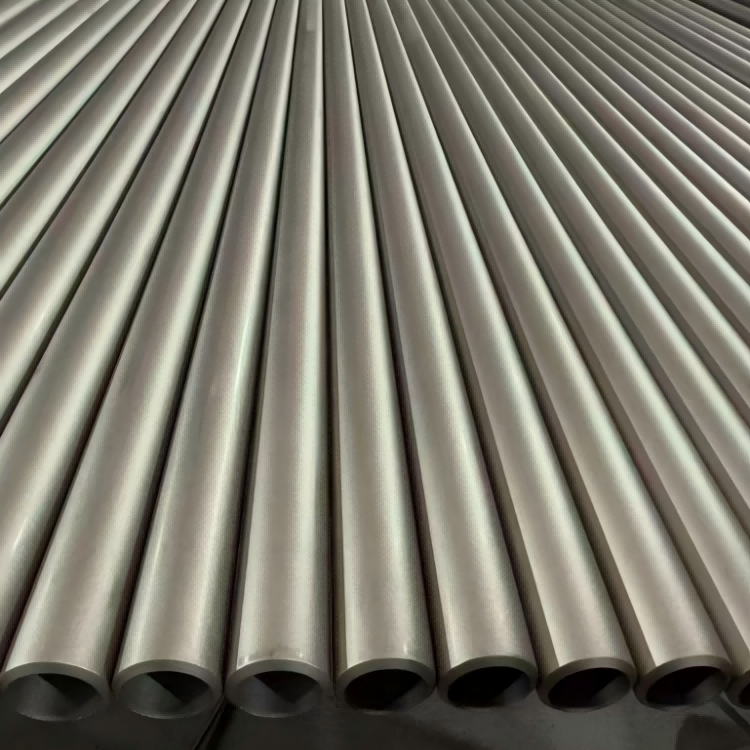
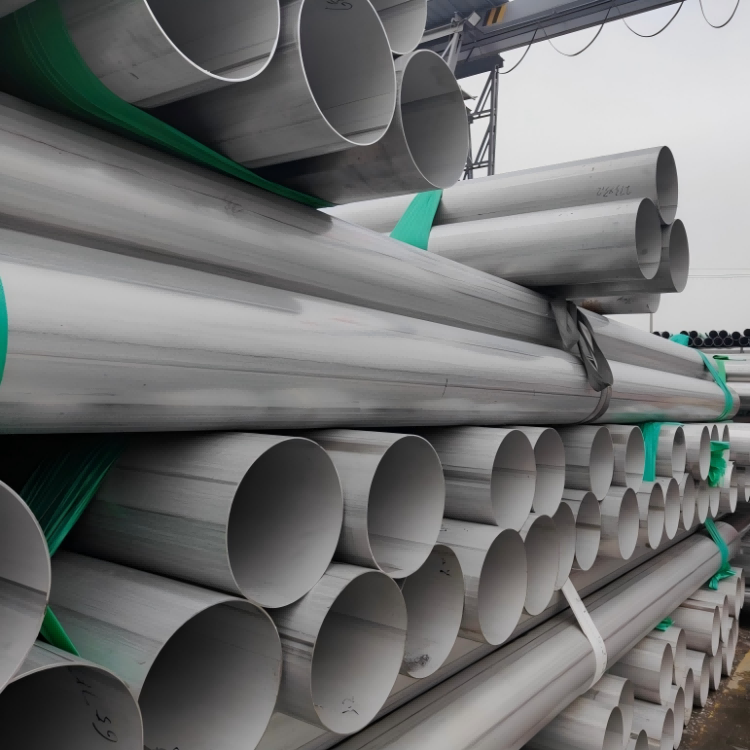
CCUS sits where pipeline, pressure-vessel, and process codes meet, so the paperwork has to be airtight. Wenqiang manufactures to ASTM A312 and A790 for austenitic and duplex pipe, A213 and A269 for tube, and A928 for welded duplex pipe, under ASME references and an ISO 9001 system. Each shipment can carry EN 10204 3.1 or 3.2 material test certificates tying every length back to its heat number, chemistry, and mechanical results.
CCUS is scaling fast and long-term storage integrity is under a microscope, so that traceability isn't paperwork for its own sake, it lets operators show fitness for service across decades of cyclic operation. Put 316L on wet and amine duties, duplex or super duplex on high-strength, high-chloride, impurity-laden transport, back it with verified certification, and a CCUS system has the corrosion margin it needs. Match the grade to the actual chemistry of each stream instead of defaulting to one material, and you've done the real work of CCUS material selection.
Frequently Asked Questions
Q: Can carbon steel be used for CO2 pipelines?
A: Yes, for genuinely dry, high-purity dense-phase CO2 trunk lines it can be economical, but stainless steel is specified where water and impurities such as H2S or O2 can form corrosive acids, and at valves, instrument lines, and upset-prone points.
Q: Why choose duplex 2205 over 316L for transport?
A: Duplex 2205 offers about twice the yield strength for thinner, lighter pipe plus superior resistance to chloride pitting and stress-corrosion cracking, which matters when the stream carries chlorides and impurities.
Discuss CCUS-grade stainless with Zhejiang Wenqiang: +86 577 8922 2595 / https://www.chinawqsteel.com/

Copyright © 2026 Strongwin Stainless Steel Group Co., Ltd. All rights reserved. - Privacy Policy
 EN
EN
 Hot News