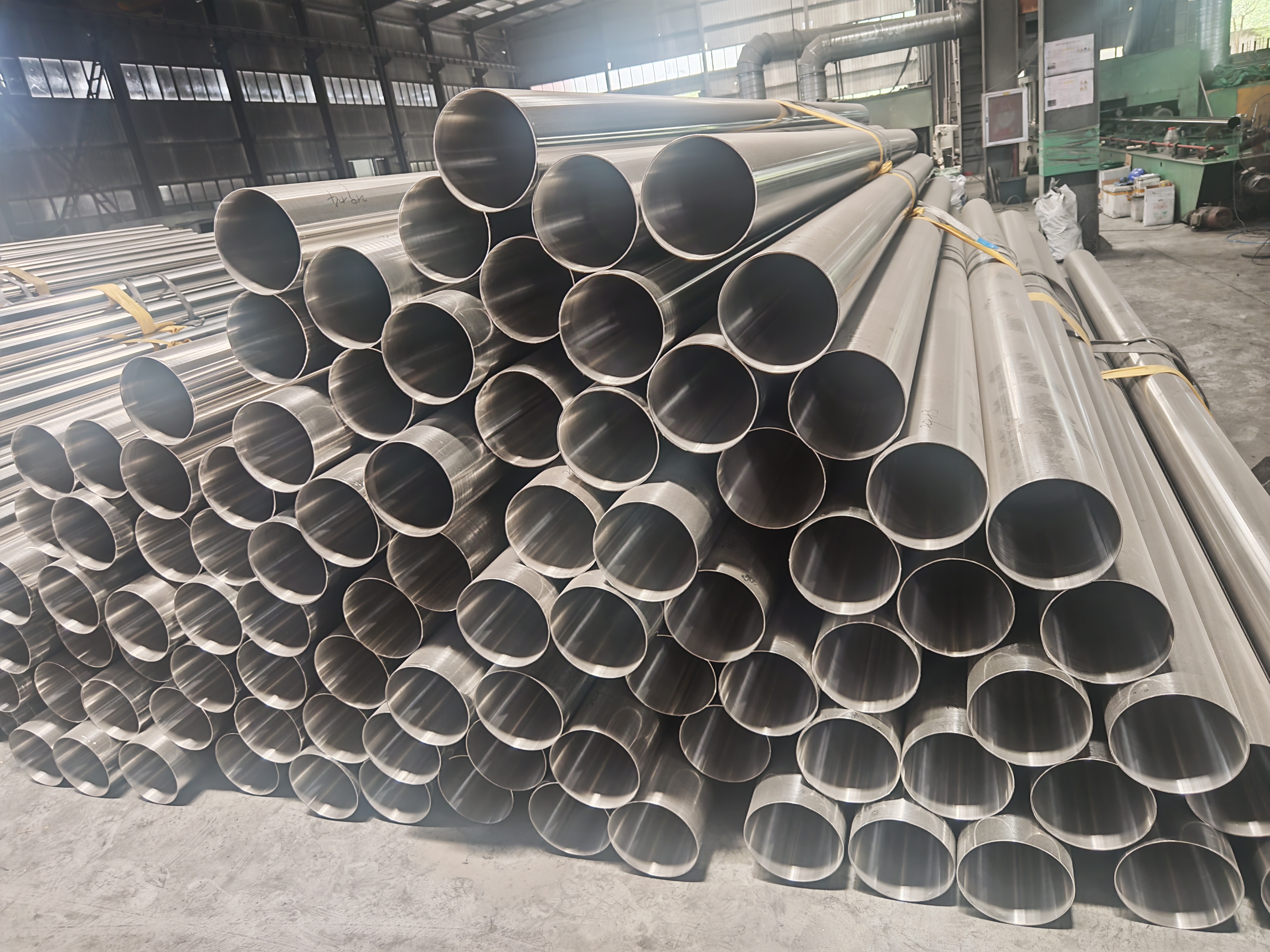
303 Stainless Composition: Superior Machinability and Corrosion Resistance for Industrial Applications

All Categories

Get a Free Quote

Our representative will contact you soon.
Email
Mobile/WhatsApp
Name
Company Name
Message
0/1000

303 stainless composition

303 stainless composition represents a specialized austenitic stainless steel alloy that delivers exceptional machinability while maintaining superior corrosion resistance properties. This unique material contains approximately 17-20% chromium, 8-10% nickel, and crucially includes sulfur additions ranging from 0.15-0.35%, which significantly enhance its machining characteristics. The 303 stainless composition also incorporates phosphorus content up to 0.20%, creating a free-machining grade that outperforms standard austenitic stainless steels in manufacturing applications. The primary function of 303 stainless composition centers on providing manufacturers with a corrosion-resistant material that machines easily and produces excellent surface finishes. Unlike conventional stainless steels that can be challenging to machine due to work hardening tendencies, the 303 stainless composition maintains dimensional stability during cutting operations while reducing tool wear substantially. Technologically, this composition features a non-magnetic structure in its annealed condition, offering excellent ductility and formability for complex manufacturing processes. The material exhibits outstanding cold working properties, making it suitable for intricate component production requiring tight tolerances. Applications for 303 stainless composition span numerous industries including aerospace, automotive, medical devices, and precision instrumentation. Common uses include aircraft fittings, valve components, pump shafts, bolts, nuts, and various threaded fasteners where both corrosion resistance and precise machining are essential. The food processing industry extensively utilizes 303 stainless composition for equipment components that require frequent cleaning and sanitization. Marine applications benefit from its saltwater corrosion resistance, while the chemical processing sector relies on its durability against various acidic environments. Manufacturing facilities choose 303 stainless composition for producing high-volume precision parts because it reduces production costs through faster machining speeds and longer tool life, ultimately improving overall manufacturing efficiency and product quality consistency.

Popular Products

The 303 stainless composition offers manufacturers numerous practical benefits that directly impact production efficiency and cost-effectiveness. First, this material provides exceptional machinability that surpasses most other stainless steel grades, allowing cutting speeds up to 50% faster than standard austenitic stainless steels. This increased machining speed translates to reduced production time, lower labor costs, and higher throughput for manufacturing operations. The 303 stainless composition creates shorter, more manageable chips during machining operations, preventing the long, stringy chips that typically plague other stainless steel grades and can damage workpieces or machinery. Tool life extends significantly when working with 303 stainless composition, as the sulfur additions act as natural lubricants during cutting operations, reducing friction and heat generation that normally cause premature tool wear. This extended tool life means fewer tool changes, reduced downtime, and lower tooling costs over extended production runs. The material maintains excellent dimensional stability during machining operations, eliminating the work hardening issues that commonly occur with other stainless steel grades and ensuring consistent part dimensions throughout production batches. Surface finish quality improves dramatically with 303 stainless composition, often requiring minimal secondary finishing operations that add time and cost to manufacturing processes. The composition delivers superior corrosion resistance comparable to other austenitic stainless steels, protecting finished components from environmental degradation while maintaining structural integrity over extended service periods. Cold forming capabilities remain excellent, allowing manufacturers to create complex shapes and configurations without cracking or material failure that might occur with less ductile materials. The 303 stainless composition responds well to various heat treatment processes, enabling manufacturers to optimize mechanical properties for specific application requirements. Welding characteristics prove satisfactory for most joining applications, though proper techniques must be employed to maintain corrosion resistance in weld zones. Cost-effectiveness emerges as a significant advantage, as the improved machinability often offsets any premium in raw material costs through reduced processing time, lower tooling expenses, and decreased scrap rates during production.

Tips And Tricks

Strongwin Stainless Steel Group Achieves ISO 90012015 Certification and AD 2000 Merkblatt Approval

28

Feb

Strongwin Stainless Steel Group Achieves ISO 90012015 Certification and AD 2000 Merkblatt Approval

View More
Strongwin Stainless Steel Group Announces Major Production Capacity Expansion to Meet Growing Global Demand

11

Mar

Strongwin Stainless Steel Group Announces Major Production Capacity Expansion to Meet Growing Global Demand

View More
Strongwin Stainless Steel Group Announces Strategic Partnership with Leading European Engineering Firm

11

Mar

Strongwin Stainless Steel Group Announces Strategic Partnership with Leading European Engineering Firm

View More

Get a Free Quote

Our representative will contact you soon.
Email
Mobile/WhatsApp
Name
Company Name
Message
0/1000

303 stainless composition

Superior Machinability Performance

Superior Machinability Performance

The 303 stainless composition delivers unmatched machinability performance that revolutionizes manufacturing processes across multiple industries. This exceptional characteristic stems from carefully controlled sulfur additions that create microscopic sulfide inclusions throughout the material structure, acting as built-in chip breakers during machining operations. These inclusions effectively interrupt the metal's natural tendency to form long, continuous chips that can wrap around cutting tools and damage workpieces. Instead, the 303 stainless composition produces short, easily managed chips that clear efficiently from the cutting zone, preventing heat buildup and maintaining optimal cutting conditions. Manufacturing facilities report cutting speed increases of 40-60% compared to standard 304 stainless steel, directly translating to reduced cycle times and increased production capacity. The material's consistent chip formation characteristics enable automated machining operations to run unattended for extended periods, reducing labor requirements and improving overall productivity. Tool wear rates decrease substantially when machining 303 stainless composition, with cutting tool life extending up to three times longer than conventional stainless grades. This dramatic improvement occurs because the sulfur inclusions provide natural lubrication at the tool-workpiece interface, reducing friction and heat generation that typically cause carbide tool degradation. The enhanced machinability also enables manufacturers to achieve tighter tolerances more consistently, as the material responds predictably to cutting forces without the unpredictable work hardening that plagues other stainless steels. Surface finish quality improves significantly, often eliminating secondary finishing operations entirely and reducing overall production costs. High-speed machining operations become feasible with 303 stainless composition, opening possibilities for advanced manufacturing techniques that maximize throughput while maintaining quality standards. The material's excellent machinability characteristics make it particularly valuable for complex geometries requiring multiple machining operations, as each successive operation benefits from the same superior cutting characteristics that reduce cumulative processing time and costs.
Exceptional Corrosion Resistance Properties

Exceptional Corrosion Resistance Properties

The 303 stainless composition provides outstanding corrosion resistance that protects components in demanding environmental conditions while maintaining structural integrity throughout extended service life. This remarkable resistance stems from the chromium content that forms a passive oxide layer on the material surface, creating an invisible barrier that prevents oxidation and corrosion from progressing into the base metal. The passive layer continuously regenerates when damaged, ensuring ongoing protection even when components experience surface scratches or minor mechanical damage during service. Unlike carbon steel or aluminum alloys that require protective coatings, the 303 stainless composition derives its corrosion resistance from its inherent metallurgical structure, eliminating concerns about coating degradation or maintenance requirements. This intrinsic protection proves particularly valuable in marine environments where saltwater exposure would rapidly deteriorate unprotected metals, making 303 stainless composition ideal for boat hardware, dock fittings, and offshore equipment components. Chemical processing applications benefit tremendously from the material's resistance to various acids, alkalis, and organic compounds that would attack conventional metals. The 303 stainless composition maintains its protective properties across wide temperature ranges, ensuring reliable performance in both cryogenic and elevated temperature applications where thermal cycling might compromise other materials. Food processing industries rely heavily on this corrosion resistance for equipment that requires frequent cleaning with aggressive sanitizing chemicals, as the material withstands repeated exposure to chlorine-based cleaners, caustic solutions, and high-temperature steam sterilization without degradation. Atmospheric corrosion resistance prevents rust formation in outdoor applications, eliminating maintenance costs associated with protective coatings or replacement of deteriorated components. The material's resistance to stress corrosion cracking provides additional security in high-stress applications where mechanical loads combine with corrosive environments. Long-term cost savings result from reduced replacement frequency, minimal maintenance requirements, and elimination of protective coating systems, making 303 stainless composition an economically attractive choice for applications requiring reliable long-term performance in corrosive environments.
Versatile Application Flexibility

Versatile Application Flexibility

The 303 stainless composition demonstrates remarkable versatility across diverse industries and applications, making it an invaluable material choice for manufacturers seeking a single alloy solution for multiple component requirements. This versatility stems from the unique combination of mechanical properties, corrosion resistance, and manufacturing characteristics that adapt to various design challenges and performance specifications. Aerospace manufacturers utilize 303 stainless composition for critical components including aircraft fittings, instrumentation housings, and precision fasteners where weight considerations, corrosion resistance, and reliability are paramount. The material's non-magnetic properties in the annealed condition make it suitable for applications near sensitive electronic equipment or navigation systems where magnetic interference could compromise functionality. Medical device manufacturers leverage the biocompatibility and corrosion resistance of 303 stainless composition for surgical instruments, implantable device components, and diagnostic equipment that must withstand sterilization processes while maintaining dimensional accuracy. The material's ability to achieve mirror-like surface finishes proves essential for medical applications where surface smoothness affects both functionality and cleaning effectiveness. Automotive applications benefit from the combination of strength, corrosion resistance, and machinability, with 303 stainless composition appearing in fuel system components, emission control hardware, and precision engine parts that demand reliability under varying temperature and chemical exposure conditions. Marine hardware applications take advantage of the saltwater corrosion resistance, with manufacturers producing propeller shafts, rigging hardware, and deck fittings that maintain structural integrity despite constant exposure to corrosive marine environments. Food processing equipment relies on the sanitary properties and easy cleaning characteristics of 303 stainless composition for conveyor components, mixing equipment, and storage tank fittings that must meet strict hygiene standards. The material's cold forming capabilities enable complex shapes for architectural applications, while its corrosion resistance ensures aesthetic appeal remains intact despite weather exposure. This broad application flexibility reduces inventory requirements for manufacturers who can standardize on 303 stainless composition for multiple product lines, simplifying procurement, quality control, and manufacturing processes while maintaining consistent performance standards across diverse applications.

Get a Free Quote

Our representative will contact you soon.
Email
Mobile/WhatsApp
Name
Company Name
Message
0/1000